
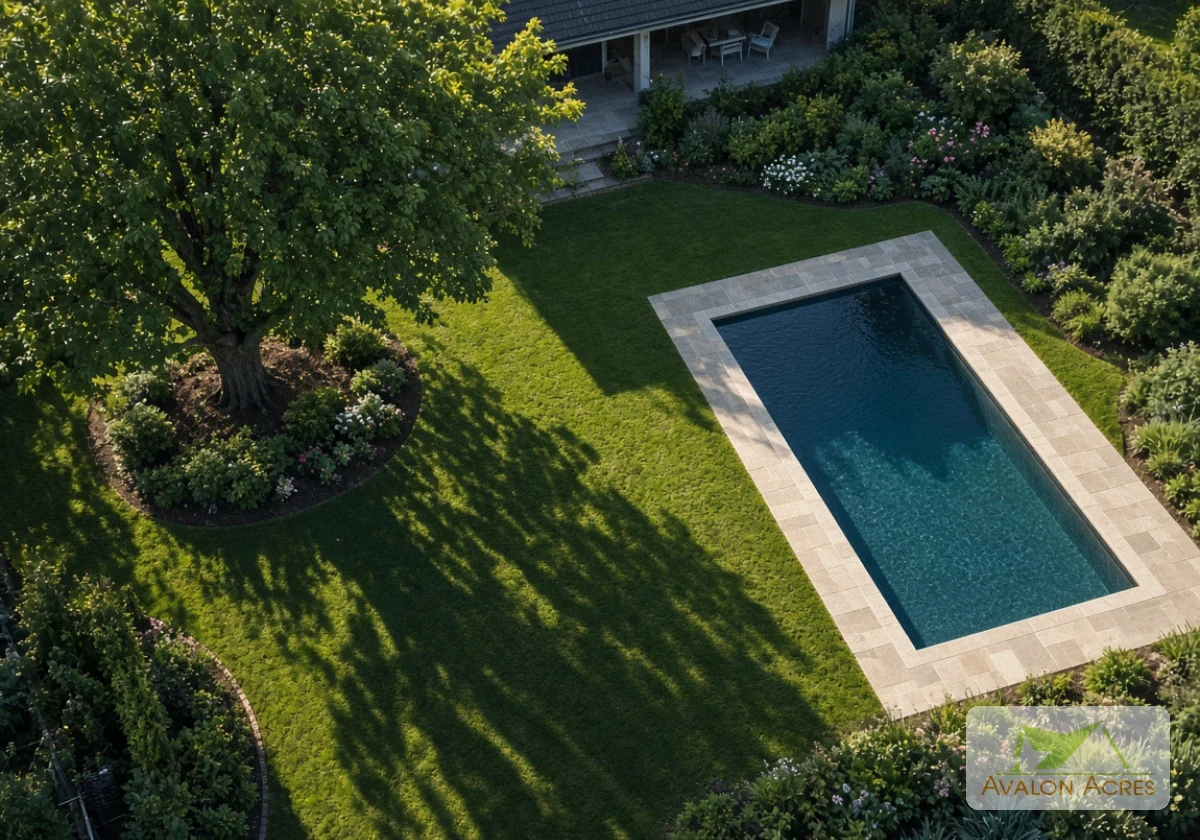
Before installing a pool near existing trees, homeowners should check root spread, trunk clearance, council rules, and excavation risks. Skip those checks, and the dig can kill a healthy tree or leave roots pushing against your new shell for years.
Those risks are easier to manage while your pool is still on paper. At Avalon Acres, we help homeowners plan outdoor spaces around existing trees, so costly changes don’t interrupt the build.
To help you avoid costly mistakes, this guide covers how far roots travel, how much clearance trees need, and which council permits to confirm. You’ll also learn how to plan the dig without damaging existing trees or facing expensive changes later.
Read on before you sign a quote.
Tree Roots Spread Much Further Than the Canopy Suggests
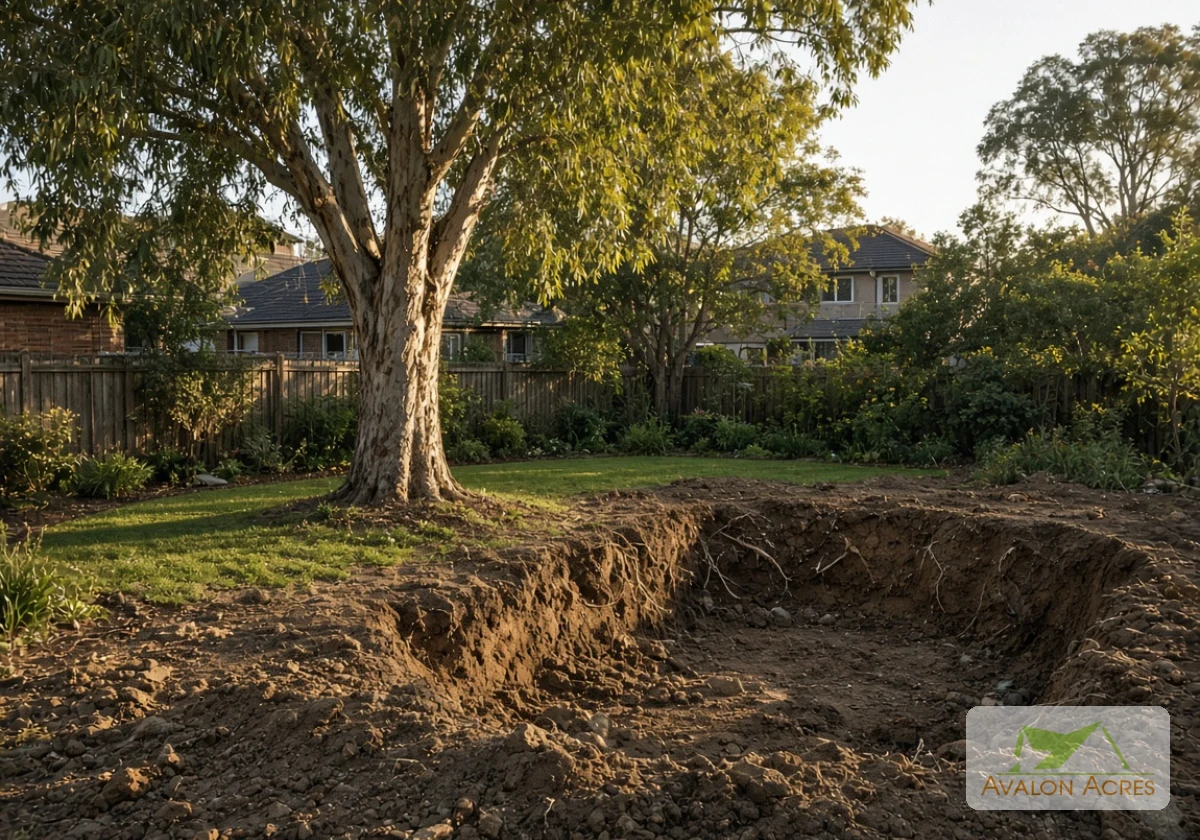
Most people assume a tree’s roots extend as deep as its branches are tall. In reality, roots spread wide and stay close to the surface, often reaching the ground where you plan to install a pool.
According to Iowa State University’s Yard and Garden team (2025), most tree roots sit within the top 6 to 18 inches (15 to 45 cm) of soil. They often extend well past the dripline, which marks the outer edge of the canopy. So, even a pool dug metres beyond the branches could cut through roots that help the tree absorb water and nutrients.
For homeowners, the distance between the trunk and the pool site can be misleading. If you’ve got a big gum or jacaranda near the back fence, assume its roots run under your pool spot until a root survey proves otherwise. You’ll find more backyard planning guides on our blog for broader layout ideas.
Before settling on your pool’s position, check for these signs that nearby tree roots could interfere with excavation:
- Visible Surface Roots: Pavers lifting or lawn edging shifting near your planned pool site could point to growing roots. Some may extend further underground. Check their distance from the proposed excavation area.
- Wide Canopy Spread: Check whether the canopy extends towards your planned pool edge. The roots may reach even further than the branches. An arborist can help you assess how much space the tree needs.
- Spreading Tree Species: Figs, gums and poplars can develop extensive root systems. Even when the trunk sits several metres away, roots may still reach the excavation area. Identify the species and check its likely root spread.
- Older Established Trees: Decades of growth give mature trees plenty of time to develop extensive roots. Some may already run beneath nearby fences and paths. Before finalising the pool layout, have an arborist assess the root zone.
- Soft, Damp Soil: Don’t assume every damp patch means roots are nearby. Poor drainage can leave similar signs, especially after heavy rain. Check the soil conditions before deciding where to excavate.
If you notice any of these signs, get an arborist to assess the roots before finalising your pool’s position. An early assessment lets your designer adjust the pool layout while it’s still on paper.
How Much Clearance Do Backyard Pools Need From Established Trees?

With roots reaching that far, backyard pool tree clearance comes down to trunk thickness rather than a single safe distance. Many Victorian councils use the Tree Protection Zone (TPZ) to identify areas where digging could harm a tree.
Hobsons Bay City Council’s TPZ formula multiplies the trunk diameter, measured 1.4 m above ground, by 12. Use the examples below to estimate the clearance your tree may need.
| Trunk diameter at 1.4 m | TPZ radius (diameter × 12) | What it means for your pool |
|---|---|---|
| 20 cm | 2.4 m | Usually workable if the pool stays outside that circle |
| 40 cm | 4.8 m | Get arborist advice before the shell edges any closer |
| 60 cm | 7.2 m | Plan to move, shrink or reshape the pool |
Before finalising your pool layout, grab a tape measure and check the trunk diameter. Share that measurement with your pool designer and arborist so they can assess the site before excavation begins.
Council Rules and Permits: What to Confirm Before Removing or Pruning a Tree
Once you know your TPZ radius, check the council rules for removing or pruning nearby trees. These rules may affect your pool plans, even when the tree sits entirely on your land. Before calling a tree removal crew, confirm these three points with your city or shire council:
- Tree Protection Status: Size, species, and location can each affect tree protection under local laws or planning overlays. Some councils use trunk circumference, while others maintain lists of protected species. Ring the planning desk with your trunk measurement and species name, and ask for the answer in writing.
- Permits for Nearby Works: Keeping the tree doesn’t always mean you’re free to dig around it. Excavation, pipe trenches and footings within its TPZ may need council approval. Before lodging your building application, ask whether your pool plans require a separate permit.
- Neighbouring Trees: Roots from next door may extend into your yard, even when the trunk sits outside your property. Cutting those roots could affect the tree’s health and involve council rules or your neighbour’s rights. Speak with your neighbour early and include their tree in the arborist’s site plan.
Permit timeframes differ between councils, so lodge your application before you book contractors. Many councils also request an arborist report, so arranging one early could help prevent approval delays.
Planning Pool Excavation Near Established Trees Without Losing Them
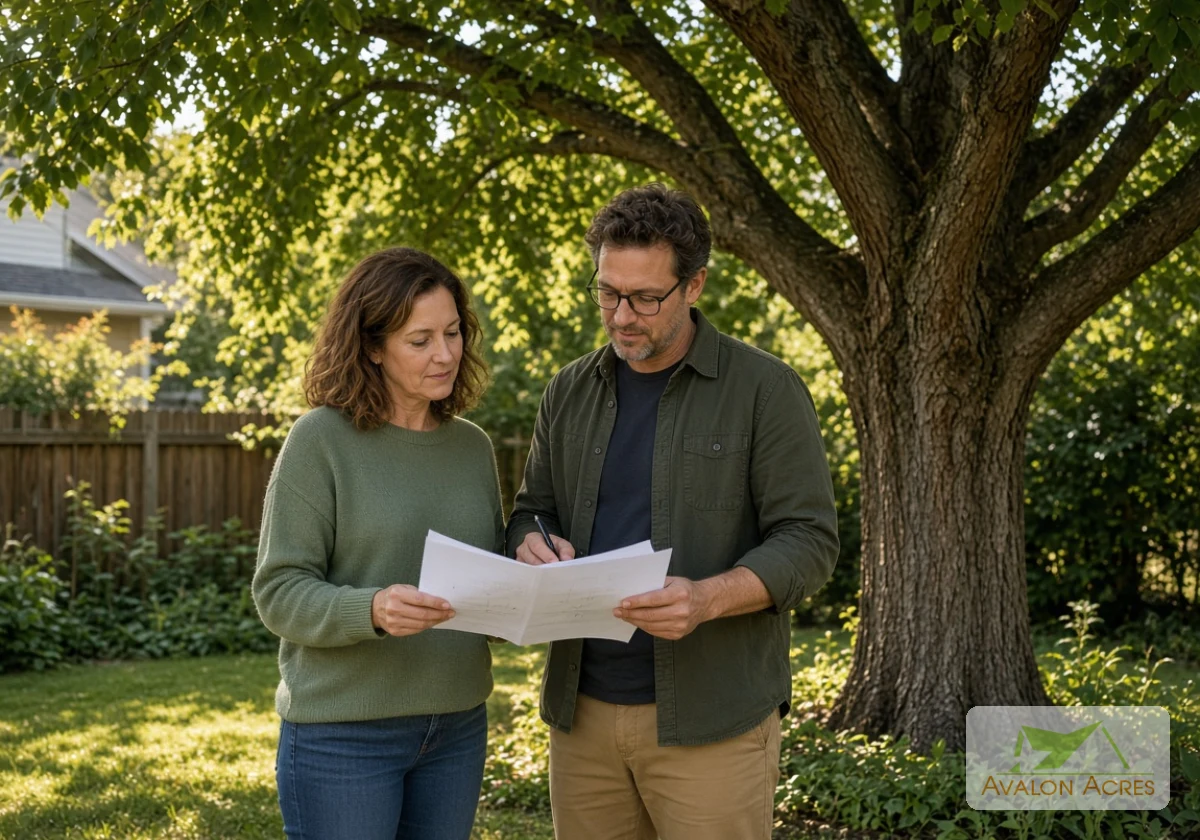
With the permits sorted, attention shifts to the dig itself. Pool excavation near established trees often damages roots before the shell is even shaped, as machinery, spoil, and deliveries crowd the yard.
To protect the trees throughout construction, plan these five stages carefully before work begins.
Marking the tree protection zone before any machinery arrives
Fence the TPZ with temporary mesh panels before any machinery arrives on site. A painted line on the grass won’t stop a bobcat driver from crossing the root zone. Flagging tape alone isn’t reliable either, as it can easily come loose during construction.
To keep everyone clear of the protected area, add warning signs and brief each crew before they start work. Include the plumber and concreter, since both may need access near the tree. A quick check each morning will help you spot and reset any panels that have shifted.
Choosing hand digging or hydro excavation inside the root zone
Inside the root zone, use shovels or hydro excavation instead of an excavator bucket. Hydro excavation uses pressurised water and a vacuum truck to uncover roots without tearing them.
Once workers expose the roots, an arborist can check them before anyone makes a cut. On careful builds, the arborist watches the digging and decides which roots need cutting. Clean cuts cause less damage than torn roots, so allow extra time for digging near the tree. Ask your contractor to quote both methods for that area.
Keeping the excavator, spoil heaps and concrete trucks off the roots
Heavy machines can press soil down and damage tree roots, even without cutting them. Roots need air and water to stay healthy, but packed soil makes both harder to reach. Even one loaded concrete truck parked under a tree can cause damage.
To protect tree health, plan where machines will drive, where soil will go, and where the concrete pump will sit. Keep them outside the TPZ and mark the access route on your site plan before getting quotes. If machines must pass near the roots, use ground protection mats or a thick layer of mulch.
Managing the water and drainage changes a pool shell creates
Your new pool shell and its paving change where rainwater soaks in. Some roots may dry out as they lose moisture, while extra runoff could leave other roots sitting in wet soil.
So, before construction starts, ask your pool builder where stormwater and pool backwash will drain. Keep overflow away from the trunk and avoid sending too much water into the root zone. During the first summer after installation, water the tree deeply during dry spells to support its health.
Timing the dig and any pruning to the tree’s growing season
Trees generally cope with root loss better in cooler months, when they lose less water through their leaves. Summer digging adds heat stress on top of root damage (a rough combination for any tree, young or old).
Still, the right time depends on the species and climate. Sunshine Coast figs and Melbourne elms have very different growing seasons, so ask your arborist which months suit your tree.
You can also book any tree pruning for the same visit. Bundling both jobs gives the tree one recovery period instead of two and keeps your tree services to a single booking.
Book an Arborist Check Before the Excavator Arrives
Now you know what to check before installing a swimming pool near trees. Root mapping, trunk clearance, and council approval all help protect existing trees. Those checks also prevent costly changes during construction.
Start by measuring the trunk and contacting your council’s planning team. Then book an arborist to assess the root zone and advise on any tree pruning needed before excavation. Early advice also helps your pool designer settle the final position.
Ready to plan a backyard pool around your trees? Contact Avalon Acres for practical advice on placing your pool so the yard and the trees both thrive.