
Most backyard drainage problems begin well before the first drop of rain hits your yard. They usually trace back to a build that didn’t account for where the water would go.
And once that happens, you’re looking at pooling water on paving, soil erosion through garden beds, and foundation damage that’s expensive to repair. So if you’re planning a patio, pool, fire pit, or garden area, drainage needs to come first.
That’s something we take seriously at Avalon Acres. We design and build outdoor living spaces across Brisbane and South East Queensland, and proper drainage is built into every project from day one.
In this guide, we’ll cover yard grading, clay soil, backyard drainage systems, and patio falls. You’ll also see which drainage solutions keep your backyard protected well after construction finishes.
Why Backyard Drainage Problems Start Before the Build
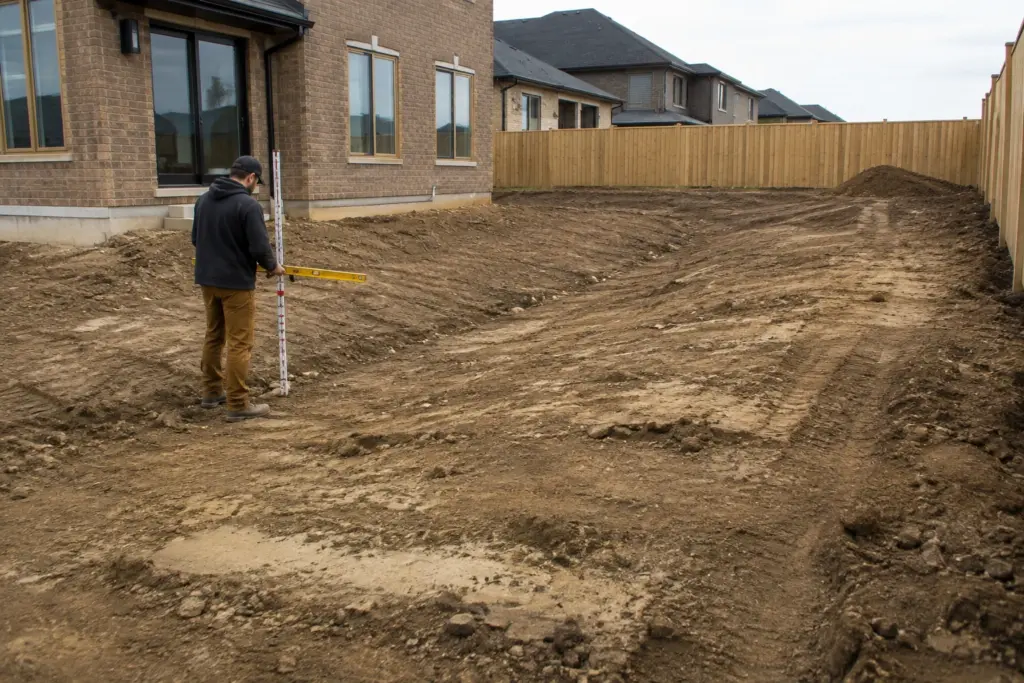
Most backyard drainage problems come from building outdoor features without planning for water flow first. However, water always finds the lowest point on your property, and without a clear exit route, it pools against footings, under paving, and through garden beds (that’s when foundation damage and soil erosion start).
Before any construction begins, your yard’s slope, soil type, and surface runoff patterns all need to be mapped out. Your patio, pool surround, and landscaping each push water in different directions.
So if these areas aren’t graded and drained correctly, excess water will flood low-lying lawn and garden zones instead.
How Yard Grading Decides Where Water Ends Up
Proper yard grading moves water away from your house, foundations, and outdoor living areas before anything goes wrong. But when the grading is off, runoff pools against retaining walls, floods your lawn, and washes soil out of your garden beds.
So what is yard grading? It refers to the slope of your land and how water flow is directed across the property. Even a fall of 1–2% is enough to keep drainage moving toward stormwater channels, garden drains, or the street.
And this is why grading needs to happen before construction starts. If you lay a patio over poorly graded land, surface water will collect and cause erosion along the edges. Once that’s sorted, the next factor is what’s sitting underneath the surface.
How Clay Soil Affects Your Drainage Systems
If your yard turns into a swamp after heavy rain, clay soil is probably the reason.
And if you’ve ever tried to dig through Brisbane clay after a storm, you already know what we’re dealing with. Most of the properties we work on across Brisbane’s south side and out through Ipswich sit on some version of this.
Here’s how clay compares to other common soil types when it comes to backyard drainage:
| Soil Type | Drainage Speed | Water Behaviour | What It Means for Your Build |
| Clay | Slow | Holds water, stays waterlogged, excess water flows sideways instead of soaking in | Needs ag pipes bedded in gravel trenches with sand and organic matter to channel water toward a drain or stormwater point |
| Sandy/Loam | Fast | Absorbs and releases water quickly, minimal surface pooling | Standard drainage systems usually perform well without major modifications |
The soil underneath your backyard affects every drainage decision from the ground up. If you’re building on clay, your drainage systems need to work harder to move water accumulation away from foundations, lawn areas, and paving.
Now, let’s look at the systems that handle grading, clay, and runoff.
Backyard Drainage Solutions That Work With Outdoor Features
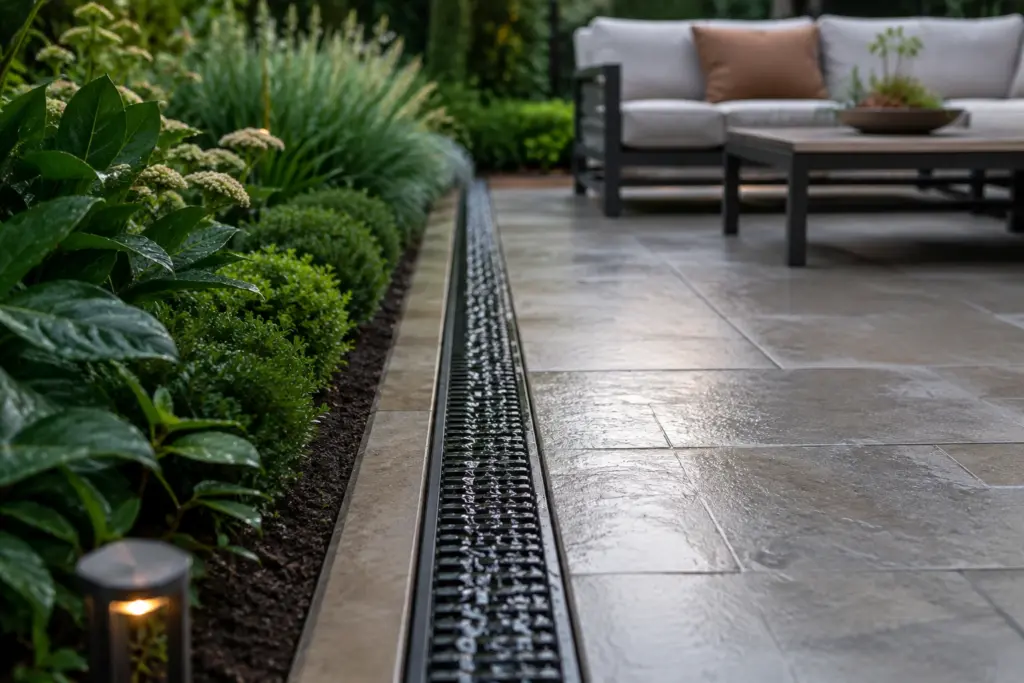
The backyard drainage solution you need depends on what you’re building. Pools, fire pits, patios, and garden areas all redirect surface runoff in different ways, so each one needs its own drainage approach.
French Drain and Subsurface Options
Frankly, most of the drainage issues we fix come back to not having one of these in the right spot.
A French drain uses a perforated pipe inside a gravel-filled trench lined with geotextile fabric. It sits below ground level and pulls excess water away before it reaches your paving, retaining walls, or landscaping.
You’ll often see them running along fence lines, beside pool surrounds, and through low-lying garden beds. And if you’re digging trenches through clay, fill them with coarse gravel and sand so water can flow freely through the system instead of sitting in the trench.
Stormwater Pits and Dry Well Setups
Some properties can’t rely on surface drainage alone, especially during Queensland’s storm season.
A stormwater pit collects runoff from multiple drain lines and channels it into the council stormwater network. You can learn more about stormwater management on your property through the Australian Government’s YourHome guide.
A dry well takes a different approach. Instead of sending water off-site, it holds runoff underground and lets it slowly soak back into the surrounding soil (a good option when connecting to council infrastructure isn’t practical).
Stormwater pits suit properties that need a direct connection to the storm drain, while dry wells work best in a suitable location where the ground absorbs water on its own.
Downpipe Extensions and Surface Runoff Routes
You’d be surprised how often we see downpipes dumping water right at the base of a house.
Downpipe extensions fix that by carrying rainwater from your roof further away from the foundations. Without them, all that runoff from your gutters pools around your home and soaks into the ground near your footings.
From there, surface runoff routes pick up the rest. Shallow swales or channel drains guide water across paved and grassed areas toward your stormwater system or nearest drainage point. If these routes aren’t planned in advance, water from one outdoor feature often floods the next closest area.
Getting Patio Drainage and Falls Right
Patio drainage falls refer to the slight slope your builder sets into outdoor paving so water drains off instead of sitting on top. On the builds we’ve done, anything under a 1 in 100 fall usually starts showing problems within the first year.
Here’s a quick guide to the recommended falls for common outdoor surfaces:
| Surface Type | Minimum Fall | Why It Matters for Drainage |
| Patio and entertaining areas | 1 in 100 | Prevents water pooling, staining, and algae growth on paving |
| Driveways | 1 in 50 | Moves heavier runoff volumes away from foundations and garage entries |
| Pool surrounds | 1 in 100 | Directs splash and rainwater away from the pool edge and into nearby drain channels |
These ratios align with Australian drainage requirements for residential sites, which set proper standards for how paved surfaces handle water flow. A patio or driveway that falls short of these numbers will show surface erosion, algae buildup, and long-term damage to your paving materials.
Drainage Issues That Show Up After a Renovation
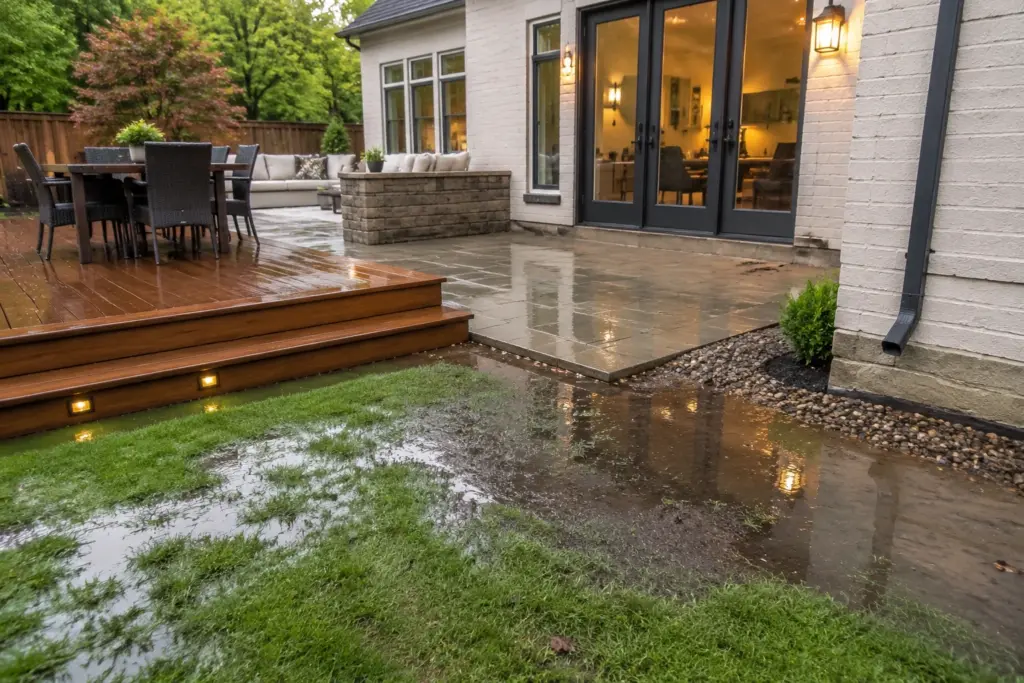
Believe it or not, some backyard drainage issues don’t appear until months after the build wraps up. By then, the damage is already spreading, and every heavy storm makes it worse (and the disruption to completed surfaces adds even more to the bill).
A few red flags tend to show up more than others:
- Water Pooling on Paving: Standing water after rain means your patio or driveway falls aren’t steep enough to move drainage off the surface properly.
- Waterlogged Lawn and Garden Beds: Saturated grass and flooded garden beds usually point to poor drainage or missing subsurface systems underneath your landscaping.
- Erosion Around Foundations: Soil washing away near your house or retaining walls means stormwater runoff has no planned route to the right drainage point. Left unchecked, debris and sediment will block your drain lines over time.
Building the right backyard drainage systems into the original plan is still the best solution, and a quick site assessment before you start will show you exactly what your property needs.
Choosing the Right Backyard Drainage Systems for Your Project
Every backyard drainage system we’ve covered in this guide plays a specific role.
French drains, stormwater pits, grading, and patio falls all solve different drainage problems depending on your site. The best solution for your property depends on your soil type, yard slope, and the outdoor features you’re building.
So before any construction begins, get a proper site assessment done. Your builder should confirm the drainage layout, grading plan, and installation details before the first slab goes down. That’s a core part of planning a functional outdoor living space, and our team at Avalon Acres handles this from the very first site visit.
Reach out for expert advice on your backyard drainage solutions, and we’ll map out exactly what your outdoor space needs.