
Many homeowners underestimate what their backyard can become. The problem is rarely the size of the space. It’s the lack of a clear plan for how each part of it should work.
A backyard zoning layout helps bring order and purpose to the space. High-end builders use it on nearly every project to divide the outdoor living area into three distinct zones, each with its own purpose and feel.
From our work across Brisbane’s northside and bayside suburbs, the yards that photograph best and sell fastest are almost always the ones with a clear zoning plan behind them. Good outdoor living starts with good planning, and that’s exactly what this layout delivers for your property.
What Is Backyard Zoning and Why Do Builders Swear By It?
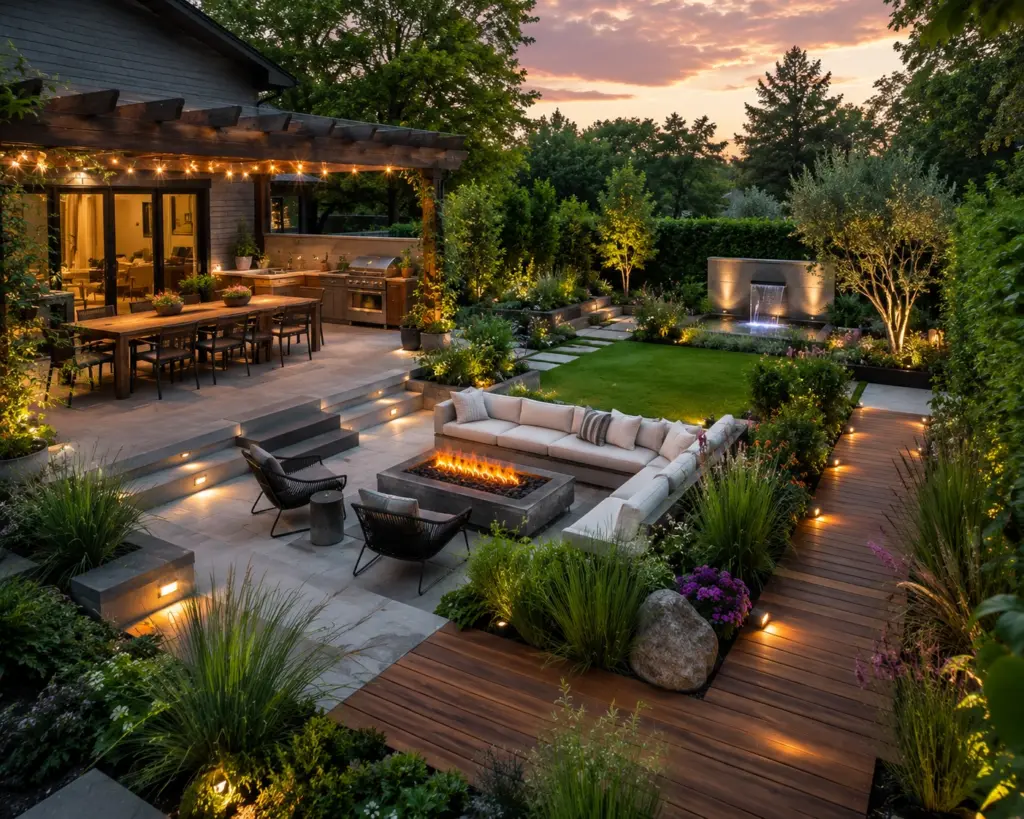
Backyard zoning layout is the practice of dividing your outdoor space into separate areas, each built around a specific activity. Instead of one open yard that tries to do everything at once, you get a space where every section has a clear role.
The difference becomes clear when you compare a backyard with no zoning plan to one that has clearly defined outdoor zones:
|
Without Zoning |
With Zoning |
|
Cluttered, underused outdoor areas |
Each area has a defined purpose |
|
Poor traffic flow during the entertainment |
Guests move naturally between zones |
|
Hard to plan or budget effectively |
Spending is focused and intentional |
|
The yard feels smaller than it is |
Defined zones make the space feel larger |
Builders use zoning because it solves the most common problems in outdoor design in one move. For homeowners, it makes planning simpler, keeps the budget focused, and changes a flat open yard to a functional, well-considered backyard.
The Logic Behind Splitting Your Outdoor Space
If you’ve ever stood in your backyard on a Saturday afternoon and thought, “This could be so much better,” you’re not imagining it. It probably could.
The reason splitting your outdoor areas works so well is simple. Each zone serves one primary purpose, so activities never compete with each other. Better planning can make a noticeable difference, as 77% of consumers underutilise their outdoor living space, often because the area lacks a clear purpose or layout.
On top of that, defined zones help you prioritise your lifestyle and budget. You spend on the areas you actually use, rather than spreading money thin across the whole yard.
How Landscape Design Turns One Yard Into Three Distinct Areas
Landscape design helps with zoning a space without putting up walls or fences. Designers use a mix of levels, plants, and paving to guide you from one part of the garden to the next without anything feeling forced or divided.
Material changes do a lot of the work here. A shift from timber decking to concrete pavers, for example, naturally signals that you’ve moved from one zone into another. It’s a subtle detail, but it registers immediately.
Strategic planting along zone borders adds another layer. Low garden beds and established trees create privacy, soften hard structural lines, and give the whole landscape a finished, considered feel.
Breaking Down the 3-Zone Outdoor Living Layout
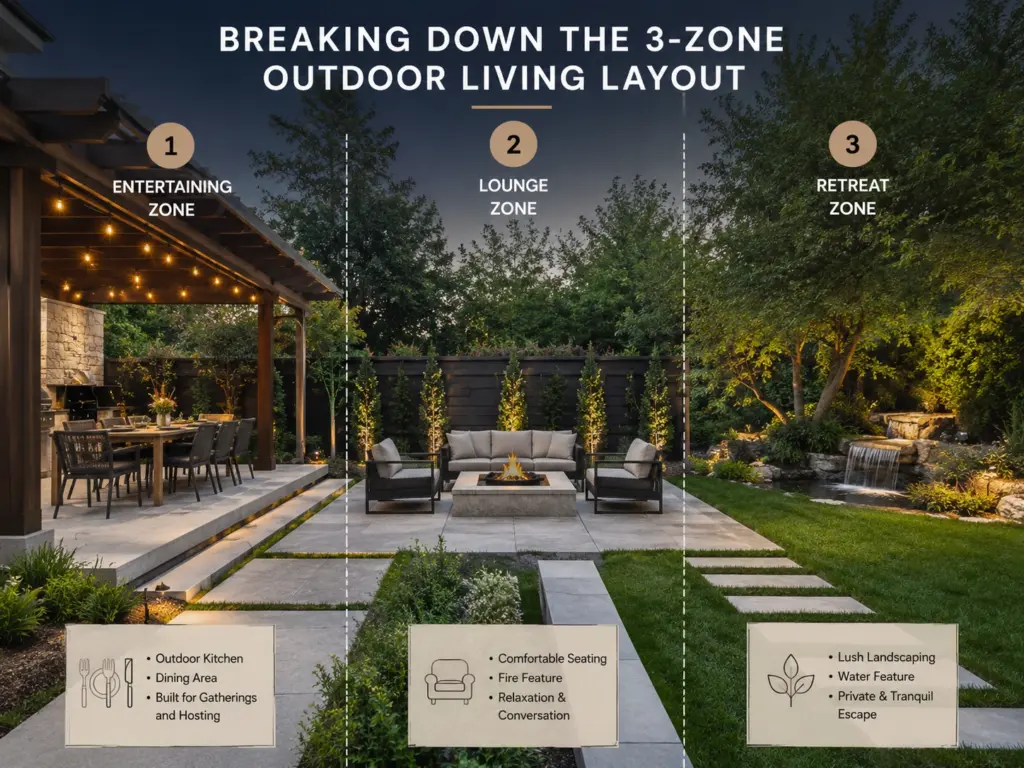
Zones are ordered from most-used to least-used as you move away from the house, so the outdoor living space flows naturally from one area to the next. Each zone connects to the next with a clear sightline and a natural transition path. Eventually, making the whole patio feel like one cohesive space rather than a collection of separate ideas.
Here is how the three zones are typically arranged, and what each one brings to the overall backyard layout.
Zone 1: The Outdoor Kitchen and Dining Area
Zone 1 is the engine room of the backyard. The outdoor kitchen and dining area sit closest to the house, usually just through the back doors. It gives easy access to plumbing, power, and the indoor kitchen stays easy and practical.
A well-built outdoor kitchen generally includes a built-in BBQ, a benchtop, a sink, and weather-resistant cabinetry. A built-in setup is far more weatherproof than a freestanding unit sitting on bare concrete. Together, these features create a cooking and dining space that works just as hard as your indoor kitchen.
This zone anchors the whole entertaining experience. Get it right, and it sets the tone for every other part of the backyard layout.
Zone 2: The Lounge and Outdoor Fireplace Space
Zone 2 sits between the kitchen and the pool area, and it’s where the pace slows right down. This is the lounge space, built around comfort, conversation, and a fireplace that earns its keep on cooler evenings.
To define the area, a pergola overhead ties the zone together, giving the space structure and adequate shade without closing it off. Add in some well-chosen outdoor furniture, layered lighting, and a side table or two, and this zone starts to feel like a proper backyard living space.
The atmosphere here is what keeps people outside long after dinner is done.
Zone 3: The Pool Area and Open Lawn
Zone 3 sits at the far end of the backyard and provides space for both recreation and relaxation. A swimming pool often serves as the focal point, while the surrounding lawn creates room for casual outdoor activities.
This zone gives the layout a natural endpoint, encouraging movement through the backyard rather than concentrating activity in a single area. It also helps separate active recreation from dining and lounge spaces.
Poolside seating, shade, and simple landscaping help tie the area together. The open lawn adds flexibility, making the space suitable for everything from family games to quiet afternoons outdoors.
Outdoor Design Details That Pull the Zones Together
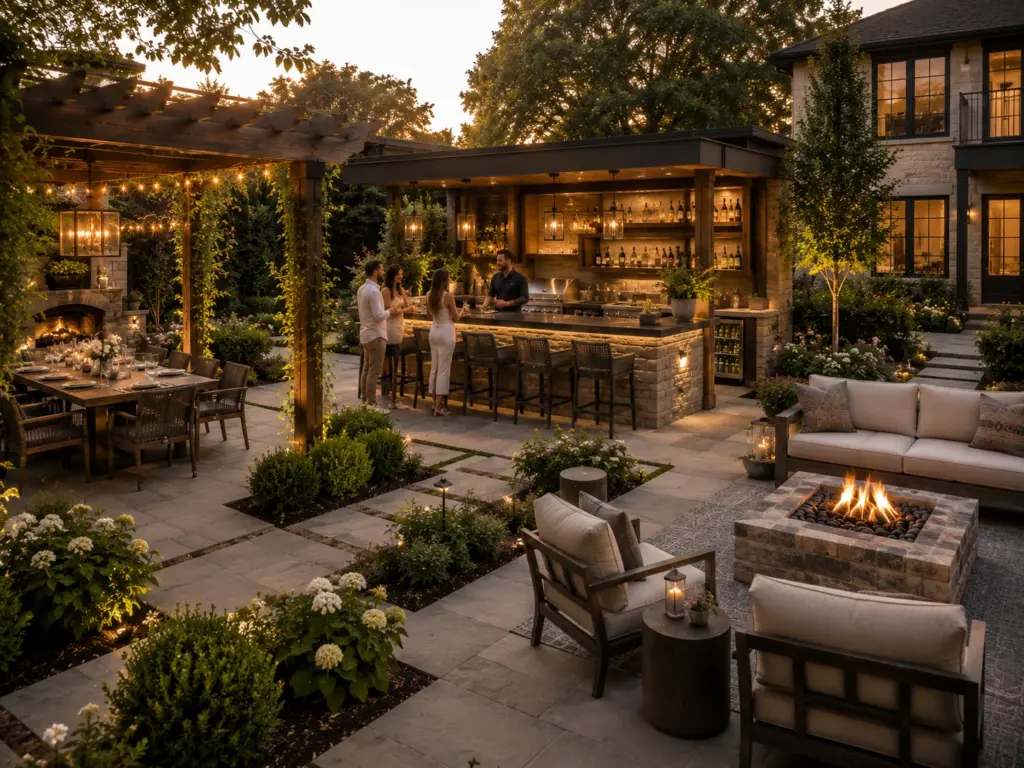
Separate parts of the yard only work when the overall outdoor design holds them together visually and physically. After working on hundreds of outdoor renovations, one thing we see consistently is that homeowners who zone their space early spend less money fixing layout mistakes later.
Let’s see some design details that keep a backyard feeling cohesive:
- Consistent Materials and Colours: Using the same tones and textures across areas creates visual interest and ties the whole landscape together without making each part look identical.
- Layered Lighting: Path lights, pendants, and wall sconces each define an area clearly after dark. This gives the backyard atmosphere and a sense of security well into the evening.
- Vertical Elements: Pergolas, screens, and feature walls add structure and complement each zone without closing off the space or making the garden feel smaller.
A well-planned outdoor design is about how all the elements work together as one cohesive backyard. The value of thoughtful planning is reflected in homeowner priorities, with 33% of homeowners upgrading outdoor areas to extend living space.
Where an Outdoor Bar Fits Into the Layout
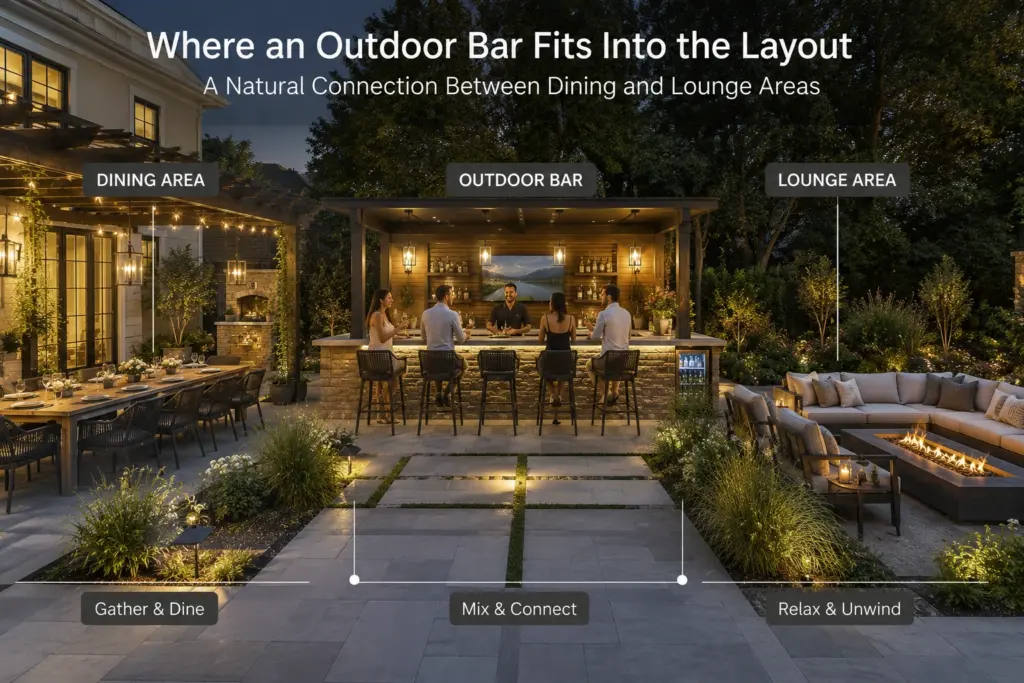
An outdoor bar sounds like a luxury add-on, but in a zoned layout. It works best positioned between Zone 1 and Zone 2, acting as a natural transition point that keeps guests moving and mingling across both outdoor areas.
Depending on your budget, available space, and how often you entertain, there are several outdoor bar options to consider.
|
Bar Type |
Best Suited For |
Approximate Cost |
|
Built-in Bar |
Permanent entertaining spaces |
$3,000 and up |
|
Modular Bar |
Flexible layouts and tighter budgets |
$800 to $2,500 |
|
Bar Cart |
Compact spaces and casual styles |
$200 to $800 |
All three options complement the layout in various styles and price points, so there’s a practical fit for most budgets. Bar seating at the transition point between zones is a popular choice for good reason. It encourages guests to settle in, grab a drink, and naturally explore the rest of the backyard.
Flooring, Levels, and Sightlines in Outdoor Design
Most people focus on what goes inside each zone. But the details between zones are what separate a good backyard from a great one. Here are three flooring and layout details worth getting right from the start:
- Raised Decking and Sunken Areas: A raised patio or sunken lounge area at ground level physically distinguishes zones without needing solid dividers. It gives the landscape a sleek, layered look.
- Keep the Pool in View: Maintaining clear sightlines from the kitchen to the pool allows parents to supervise children while entertaining, without having to step away from the dining area.
- Use Flooring to Define Movement: Consistent flooring within each zone, paired with a contrasting material at transition points. It helps reinforce the zoning strategy and guide circulation naturally.
Getting these details right early makes the whole backyard easier to build, fun to use, and a lot better to look at.
Can You Apply This Layout to a Smaller Backyard?
Yes, and in many cases, a smaller backyard benefits from zoning more than a large one does. When every square metre needs a purpose, having a clear layout stops the space from feeling cluttered or wasted.
That’s especially true in Queensland, where the weather gives you the best outdoor living conditions in the country. A well-zoned backyard is how you take advantage of that, no matter the size of the block you’re working with.
The 3-zone concept scales down well with strategic landscape design choices and compact ideas that don’t compromise on feel or function. Let’s explore how.
Scaling the Great Outdoors Down Without Losing the Feel
A compact outdoor living space can still carry the same three-zone logic. It just calls for smarter product choices and tighter planning (yes, even a 6×4 metre backyard can carry all three zones with the right layout).
For Zone 1, a single-burner outdoor kitchen setup with a fold-down benchtop works just as well as a full build. Zone 2 can draw inspiration from a small fire bowl or tabletop fireplace rather than a full outdoor fireplace. And for Zone 3, a compact plunge pool or a dedicated lawn area can deliver the same recreational value.
Using the same design language and personal style across a compact patio keeps it feeling cohesive rather than cramped.
Simple Outdoor Design Swaps for Compact Spaces
A few targeted swaps in materials and outdoor furniture go a long way in making a small yard feel zoned and finished. You don’t need to start from scratch or blow the budget to get a result worth being proud of.
For instance, Wall-mounted fold-down tables replace fixed dining settings in narrow outdoor spaces without sacrificing function. Potted plants and low garden beds replace in-ground planting to define each zone while keeping the landscape open.
Multi-purpose furniture is another smart choice for smaller backyards. Benches with built-in storage and nesting tables reduce clutter while keeping each zone practical and comfortable.
Ready to Zone In?
A backyard zoning layout is one of the clearest ways to get more out of your outdoor space without adding a single square metre. The 3-zone approach works across budgets, block sizes, and styles when planned properly, and the results speak for themselves.
If you’re ready to explore what a zoned backyard could look like for your home, here’s a good place to start:
- Talk to a landscaper about your block size and natural sightlines
- Gather photos and inspiration from completed outdoor projects
- Set a realistic budget across all three zones before committing to any one area
You can also contact Avalon Acres for a consultation and see what quality outdoor design looks like up close. Your backyard deserves a proper plan. Let’s build one together.