
Slip-resistant pool paving needs a suitable slip rating, a textured surface and good drainage. Even a highly rated paver can become slippery when water and sunscreen build up on its surface.
At Avalon Acres, we’ve spent 15 years renovating backyards, including pool areas. We recommend checking how paving performs when wet before installation, as slippery pavers often need to be lifted and replaced later.
This guide explains how slip ratings work and how travertine, concrete, stone and porcelain compare. You’ll also learn how to choose suitable finishes, pool coping and drainage slopes, plus how to maintain slip resistance.
What Makes Pool Paving Slip-Resistant Once It Gets Wet?

A textured surface and a suitable wet slip rating help pool paving maintain grip when wet. The texture reduces the water film between your feet and the paver, while smooth surfaces offer less grip.
Under AS 4586, the wet pendulum test measures slip resistance using a rubber slider on a wet surface. The results give pavers a rating from P0 to P5, with P5 offering the highest resistance.
Australian guidance recommends P4 for pool surrounds and P5 for ramps and stairs leading into water. For barefoot areas, look for a Class B or C rating, depending on where you’ll install the paving.
The NCC 2025 provisions set slip-resistance requirements for certain stairs, ramps and landings. You should also ask suppliers for AS 4586 test results rather than relying on a general “non-slip” label.
Since kids often run across pool decks with wet feet, slip resistance deserves careful attention. Check the test results first, then assess the finish and drainage to narrow your choice.
Material Options: How Travertine, Concrete, Stone and Porcelain Compare Around a Pool
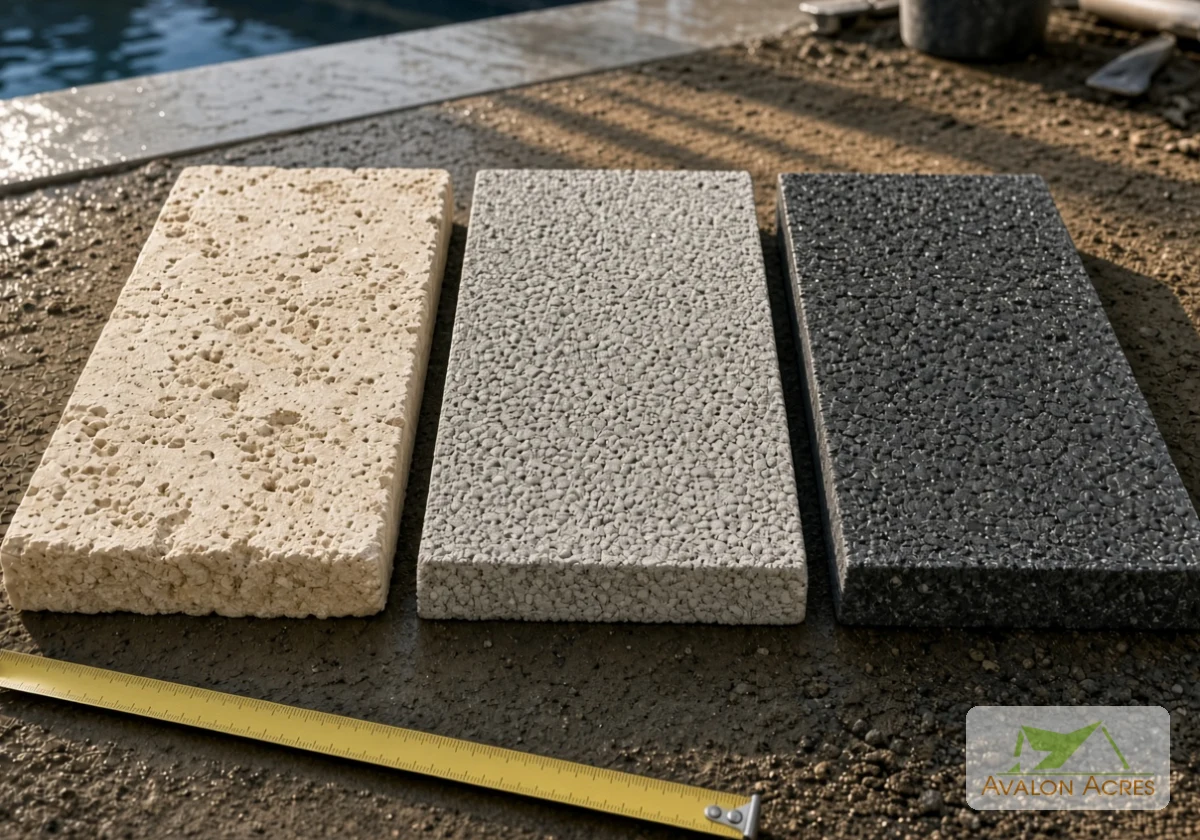
Travertine, concrete, natural stone and porcelain offer different levels of grip, depending on their surface finish. Their textures also affect how comfortable they feel underfoot and how well they perform around a wet pool.
The table below compares four common pool pavers:
| Material | Wet Grip | Heat Underfoot | What It Means For You |
|---|---|---|---|
| Travertine | Good when tumbled or left unfilled | Stays cool | Choose a tumbled finish and a matt sealer |
| Concrete Pavers | Good with a textured or exposed face | Warms up in darker shades | Pick a light colour and check each batch’s P rating |
| Natural Stone Pavers (Granite, Bluestone, Sandstone) | Good when flamed or sandblasted | Bluestone runs hot | Request a flamed face rather than a honed one |
| Porcelain | Varies widely between products | Moderate in light tones | Buy only outdoor tiles rated P4 or higher |
Travertine and light-coloured concrete pavers are popular around Australian pools because they offer grip and comfort underfoot. Porcelain also suits modern pool areas, but you’ll need to confirm its wet slip-resistance rating with the supplier.
Checking the Finish, Pool Coping and Layout Before You Buy
Slip-resistance ratings come from controlled tests, but the paving’s finish and drainage also affect safety around a pool. We consider these factors when planning pools and other water features.
Run through these five points while you compare options.
Which Surface Finish Gives the Best Grip?
Tumbled, sandblasted, flamed and textured finishes generally offer better grip on wet pool paving. Their rough surfaces help reduce slipping by providing more traction underfoot.
Surface texture also helps you identify finishes to avoid. Polished and honed surfaces often offer less grip when wet (glossy sealers can reduce grip too). If you prefer a smooth finish, confirm its wet slip-resistance rating first.
You can also feel the surface texture by running your hand across a sample. A slightly rough finish may offer better grip, but the wet slip-resistance rating gives you a more reliable guide.
Picking a Pool Coping Profile Bare Feet Can Trust
Pool coping covers the top edge of the pool wall, where swimmers often get in and out. Bullnose coping has a rounded edge, which helps protect swimmers from scrapes and bumps.
That said, a rounded edge can still become slippery when wet. Make sure your pool coping has a suitable wet slip-resistance rating, just like your pavers.
Square-edge coping is another choice, but its sharp corners may be less comfortable for swimmers. Compare both styles before you decide (kids often play and sit on pool edges).
Falls, Joint Widths and Where the Water Goes
A fall is a gentle slope that helps water drain off the paving instead of pooling on the surface. Without a proper slope, water collects in low spots and creates damp areas where algae can grow.
The gaps between pavers also affect how water drains. Properly spaced joints allow water to flow towards drainage points, depending on how the paving is laid.
At the quote stage, ask your installer where water will drain from each section. They should use a spirit level to confirm the slope before laying the pavers.
Light Colours Stay Cooler Underfoot
Why do light-coloured pavers feel cooler under bare feet on hot summer days? They reflect more sunlight and absorb less heat than darker pavers. Cooler paving also means swimmers walk instead of rushing across hot surfaces, which lowers the chance of a slip.
The NSW guidance on cool paving materials from 2025 explains how lighter paving helps reduce heat build-up. Cream, sand and light grey pavers are good options for paths where swimmers walk barefoot.
How to Test a Wet Sample in Your Own Backyard
Before choosing your pool paving, ask your supplier for a sample and wet it with a garden hose. Carefully feel the surface under bare feet and wet thongs to compare comfort and grip.
Next, leave the sample outside for a week to see how it handles sun, leaves and pool water. You’ll also notice how hot it gets (especially on summer afternoons).
These simple steps will help you compare finishes before buying. However, you’ll still need the supplier’s wet slip-resistance rating to confirm how the paving performs.
How Regular Maintenance Keeps Pool Paving Slip-Resistant
Regular cleaning helps pool paving stay slip-resistant because it removes dirt and other substances that reduce grip. Over time, algae, sunscreen and body oil can build up on the surface and increase the risk of slips.
In our experience, shaded spots and areas near pool steps get slippery first because they stay damp longest. Give them a gentle scrub with a cleaner suited to your pavers.
The sealer you choose also affects how slippery your pool paving becomes. Glossy sealers can reduce surface grip, so choose a slip-resistant product that’s suitable for your paving material.
Your maintenance routine should cover these jobs:
- Shaded Corners: Algae tends to grow in spots that stay damp all day. You’ll often notice these areas getting slippery first. Give them a gentle scrub with a cleaner suited to your pavers.
- Sunscreen and Oil: After a full day of swimming, sunscreen and body oil often end up on the paving. They can leave slippery patches. A quick rinse helps, but greasy marks need a mild cleaner.
- Resealing: A worn sealer leaves pavers open to stains, but a glossy replacement can cost you grip. Ask your supplier for a slip-resistant product that suits your paving before you reseal.
- Leaves and Chemicals: Don’t let wet leaves sit on your paving for days. They can leave stains, and chemical spills may damage the surface. Clear the leaves and rinse spills as your supplier advises.
- Coping Check: Pool edges take plenty of wear over the years and may cause accidents. For example, loose coping can catch someone’s toes or cause a fall. Look for raised or loose pieces each spring and get them repaired.
After cleaning, inspect the surface for slippery patches and give any problem areas extra attention before the next swim.

Ready to Choose Slip-Resistant Pavers for Your Pool?
Test results show how a paver performs in a lab, but your backyard decides how it performs for years. Pair a P4 or higher rating with a textured finish, a proper fall and regular cleaning.
Once you have a shortlist, put two or three samples through the hose and one-week test from this guide. The sample that stays grippy and comfortable on bare feet is the one to order.
Avalon Acres helps homeowners plan pools and outdoor spaces that look good and stay safe underfoot. Talk to our team to compare options and plan a pool surround your family can trust.