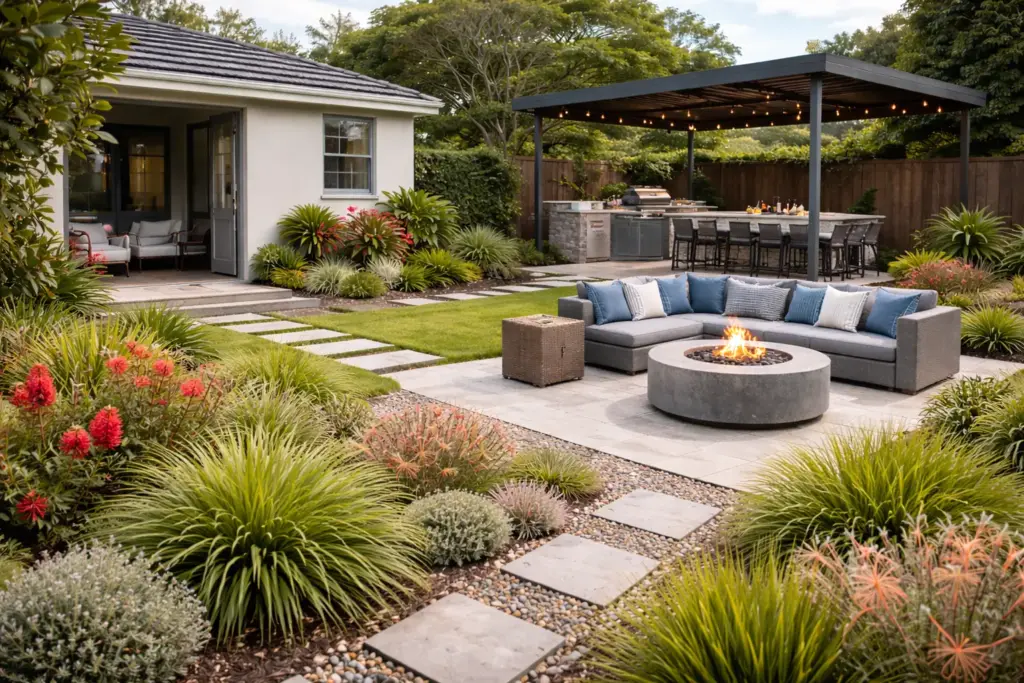
post

How Outdoor Spaces Are Being Designed for Year-Round Use

Most Australian backyards sit unused for a good chunk of the year. The weather isn’t always the problem. Most outdoor spaces just weren’t designed to handle anything beyond the warmer months. A bit of rain or a cool evening, and the whole setup feels impractical.

However, Homeowners across Brisbane and beyond are now rethinking how they use their outdoor living spaces. This shift is producing ideas that are genuinely worth paying attention to. Good design has more impact than most people expect.

This article covers the features, materials, and outdoor living decisions that make year-round backyard use not just possible, but easy to pull off.

Outdoor Living Spaces That Work in Every Season

Outdoor living spaces designed for year-round use combine weather protection, durable materials, and flexible layouts that perform in every season. According to a 2026 industry report, 82% of homeowners say they are now more interested in upgrading their outdoor living spaces compared to before 2020.

The patio is usually where that starts, and the seating area and outdoor kitchen follow from there. The right foundation starts with choosing a shelter that makes the space usable in any weather.

Covered Patio Ideas That Handle Rain, Wind, and Heat

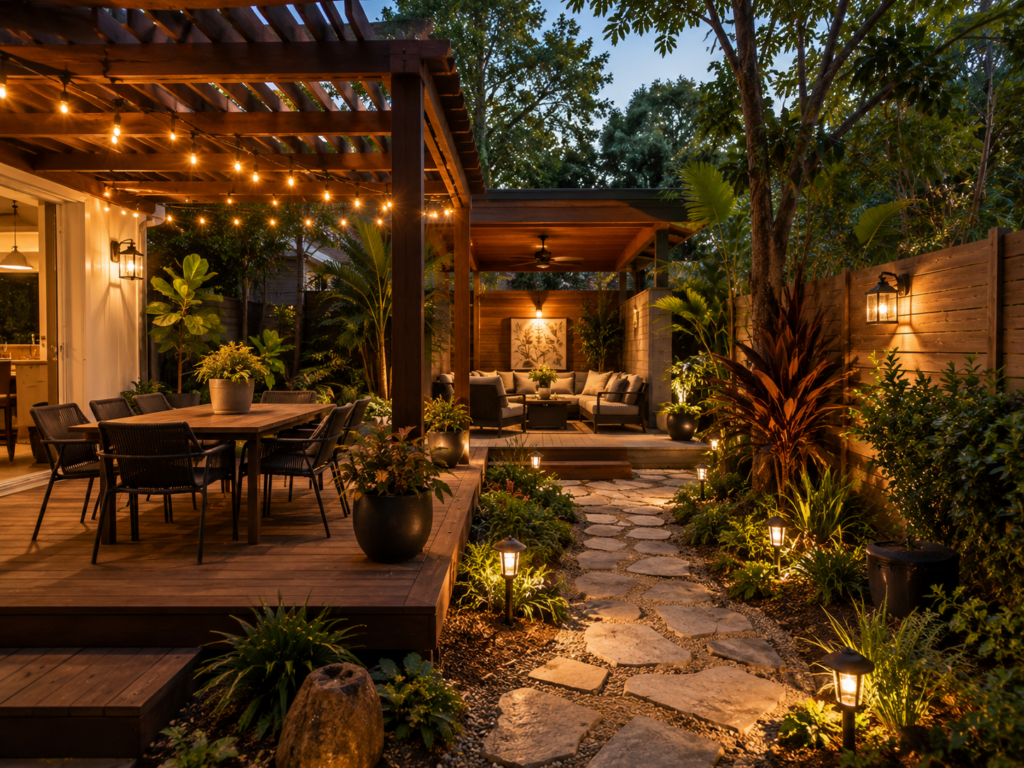
The right covered patio means you stop cancelling plans every time the forecast looks rough. Roofing materials rated for UV exposure and heavy rain are the baseline, and from there the options open up. An insulated patio roof keeps the space cooler in summer and takes the edge off on cool nights.

That said, Louvred roof systems are one of the more popular patio upgrades right now, and for good reason. They let you adjust airflow and shade on the fly, so the same space works on a 35-degree Brisbane afternoon and a drizzly winter evening. (Louvred roofs in particular are worth every cent if you’re dealing with Brisbane’s unpredictable afternoons)

And honestly, the ceiling finish plays a major role. A lined, insulated ceiling keeps the patio feeling like a proper room rather than a covered patch of concrete. And that gives the whole outdoor area a comfortable, finished feel all year.

How a Seating Area Can Stay Comfortable All Year
How a Seating Area Can Stay Comfortable All Year

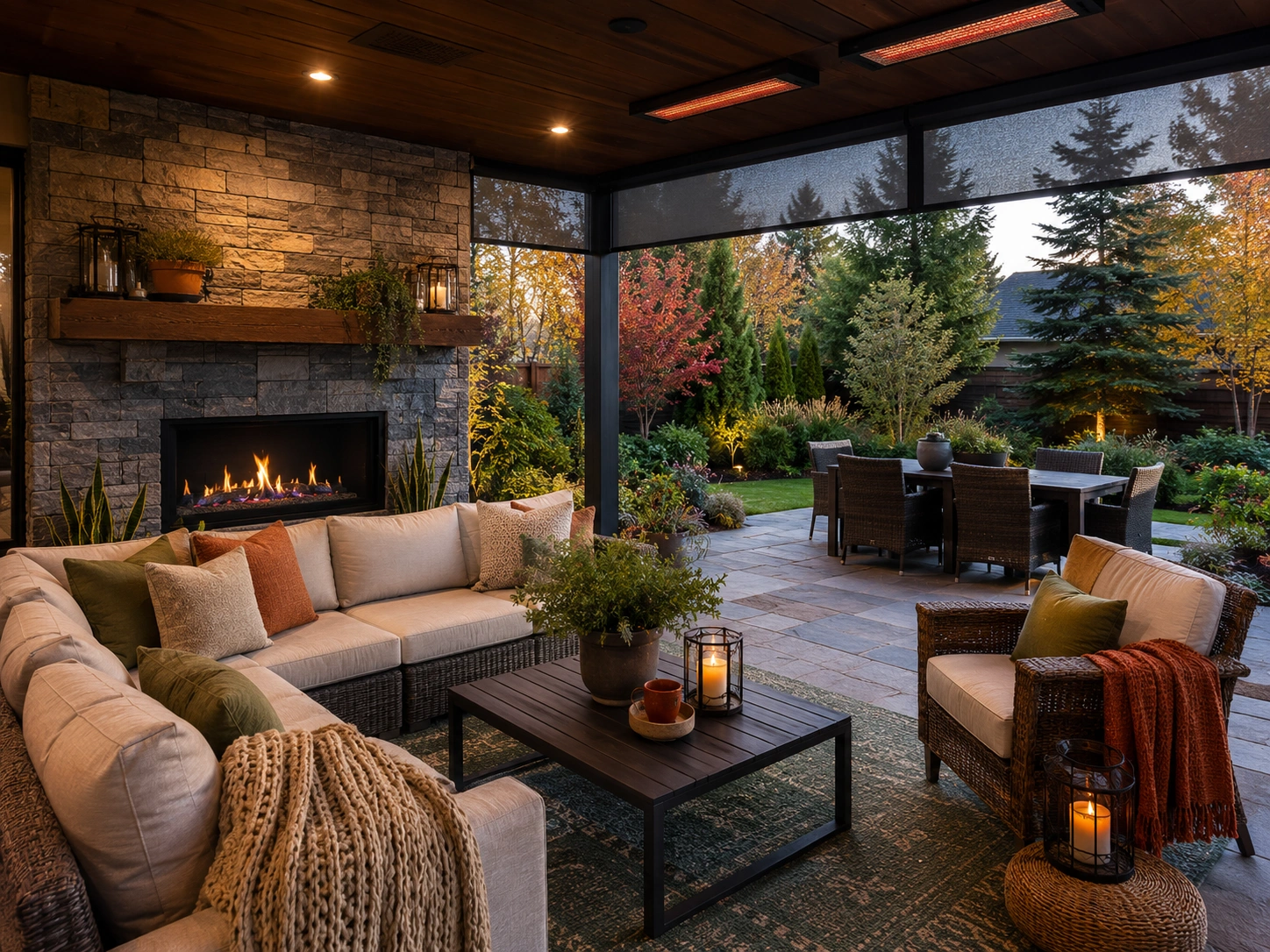
A year-round seating area depends on three things: the right materials, smart positioning, and some form of weather shelter. Get those right, and the space sees consistent use through every season.

For instance, if your outdoor seating gets packed away every April, that’s a materials problem, rather than a weather problem. UV-resistant, water-repellent fabric holds up through wet seasons without fading or going soggy. Paired with wicker furniture and outdoor rugs, the space starts to feel as comfortable as an indoor room.

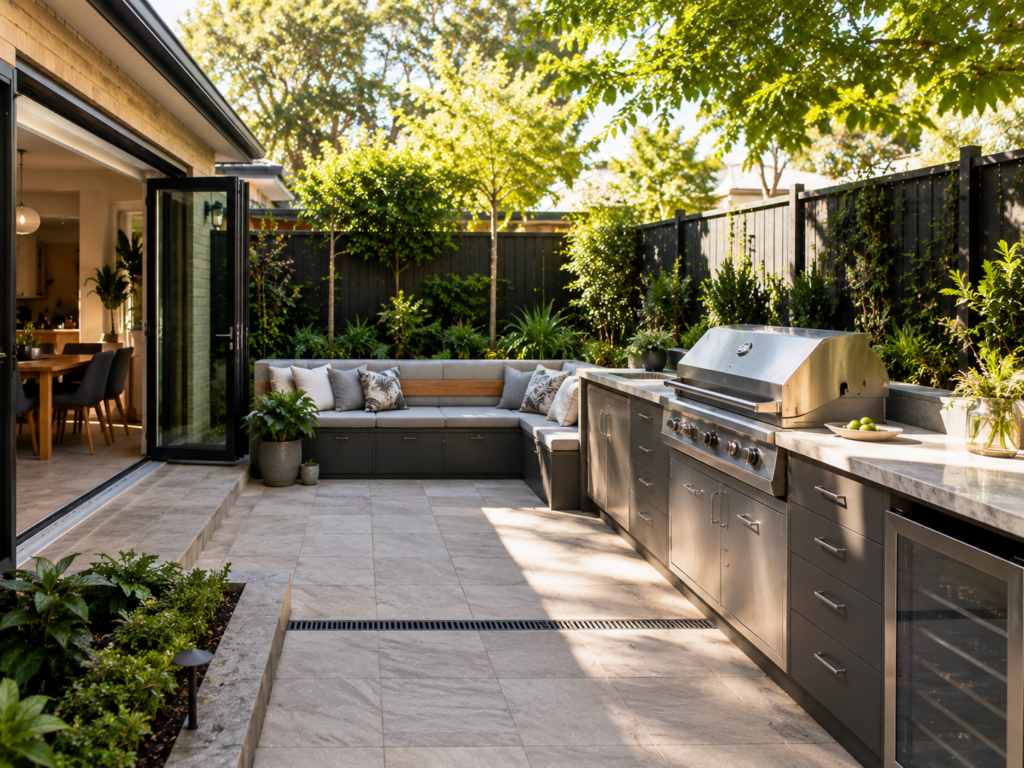
That said, built-in bench seating with storage underneath is worth considering, too. It keeps cushions dry and accessible year-round while cutting down on clutter. The whole seating area gets a cleaner, more intentional look that works across every season.

Outdoor Kitchens: Are They Worth It for Year-Round Use?

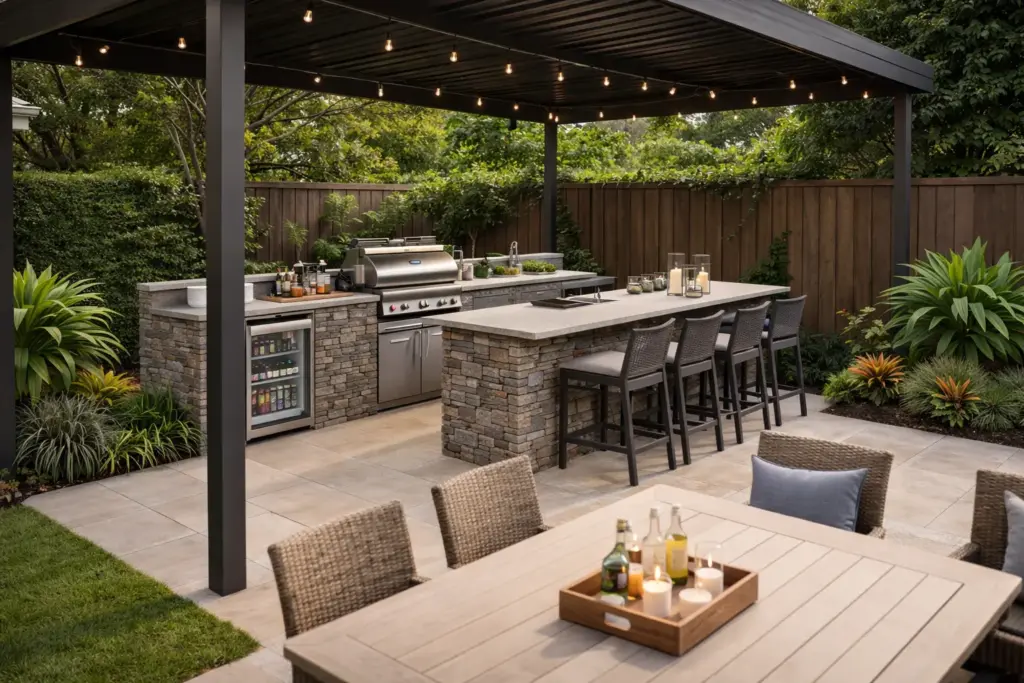
An outdoor kitchen sounds like a warm-weather luxury, but paired with the right cover, it becomes one of the most-used spaces on your property. To have a clear idea, let’s have a quick look at how the most popular material choices stack up:

Material

Weather Resistance

Maintenance Level

Stainless Steel

Excellent

Low

Stone Benchtop

Excellent

Low

Concrete

Good

Medium

Timber

Moderate

High

Brick

Good

Low

By observing the table, we can say stainless steel and stone are the preferred combination for outdoor kitchens built to last. (Stone benchtops handle heat, rain, and the occasional dropped utensil without complaining) Both materials stay low-maintenance through Brisbane’s humidity and don’t need much beyond a regular wipe-down.

Even more, the layout counts for just as much as the materials. So naturally, a well-planned outdoor kitchen with decent weather protection stops feeling like a seasonal luxury and starts feeling like a proper room extension.

Outdoor Fireplace Design and What It Does for Your Space

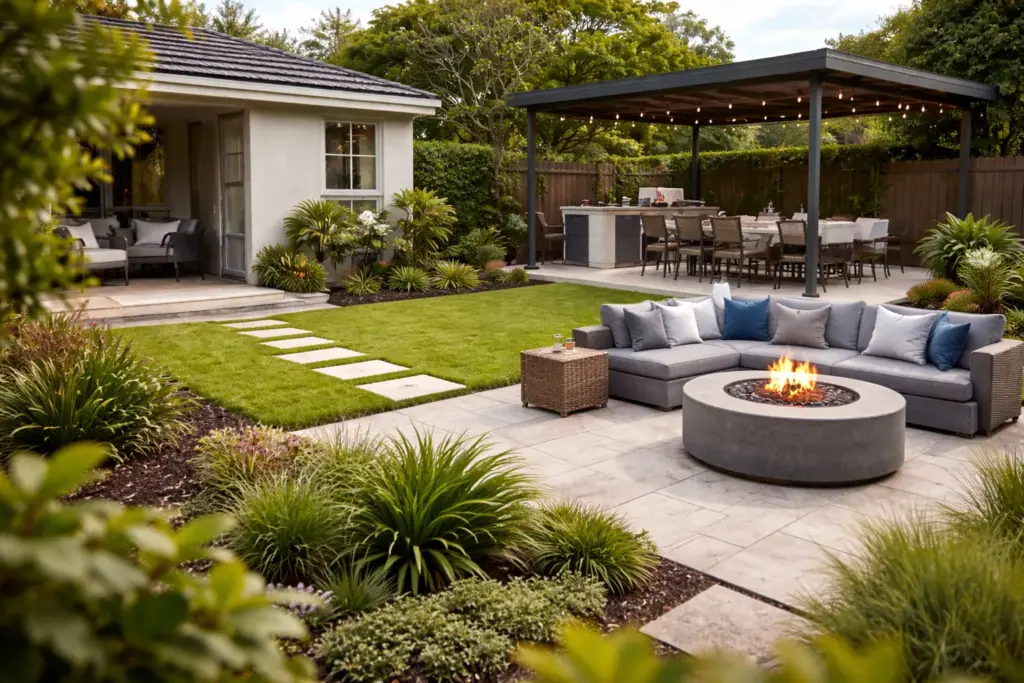
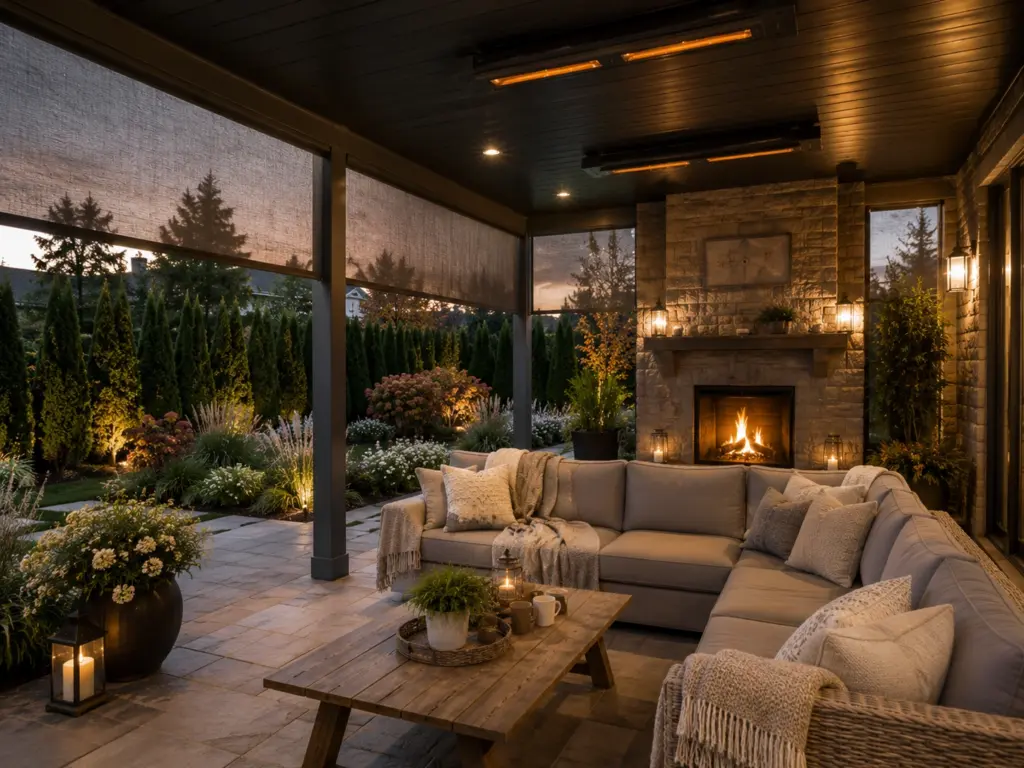
A well-placed outdoor fireplace extends your entertaining season by months and gives your backyard a focal point that draws people outside long after the sun goes down.

Not all fireplaces suit every backyard, though. Size, fuel source, and placement all factor into how much use you get from it. Here’s what to weigh before you buy.

Choosing the Right Outdoor Fireplace for Your Backyard

Here’s what it really comes down to: your layout, how often you entertain, and how much upkeep you’re willing to do. Those three things narrow the options down pretty quickly.

From what we’ve seen across hundreds of Brisbane backyards, gas fireplaces get used consistently while wood-burning ones often become occasional features. Gas gives you instant heat and stays low maintenance, which counts for a lot when you’re trying to get year-round use out of the space.

On the flip side, the fireplace size should suit the seating area first, not the overall backyard dimensions. A large fire feature in a compact garden overwhelms the space. But get the proportions right, and your outdoor fireplace becomes a natural gathering point for the whole family.

Warmth, Ambience, or Both? What Most Homeowners Actually Want
Warmth, Ambience, or Both? What Most Homeowners Actually Want

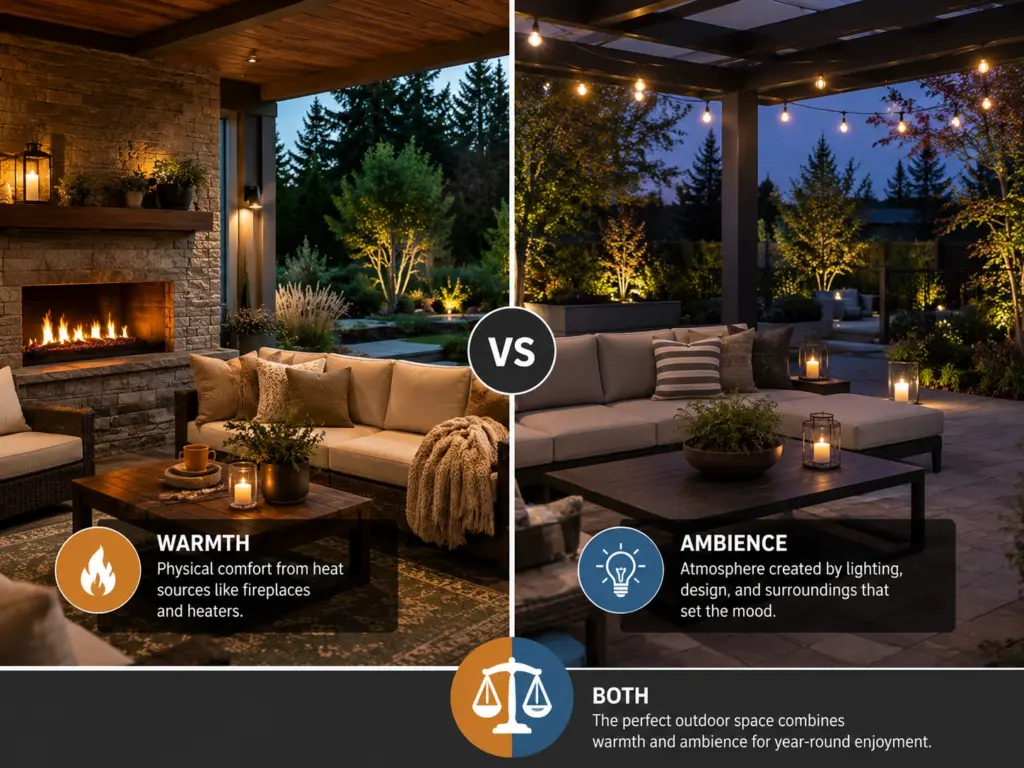
Most people install an outdoor fireplace for the look, then quickly discover it’s the warmth that keeps them coming back outside. That said, the two aren’t mutually exclusive, and the best setups deliver both without compromise.

Have a look at the most common fire feature options and what each one brings to the space:

  • Fire Pit: A natural fit for casual gatherings, fire pits create a relaxed, social atmosphere that draws people in. They work best in larger outdoor areas where smoke has room to clear.
  • Built-in Gas Fireplace: Delivers consistent heat and a clean, polished look. A great option for covered patios where a wood-burning fireplace would create smoke problems.
  • Freestanding Outdoor Fireplace: Flexible and easy to reposition, which makes it a practical choice for backyards where the entertaining layout changes regularly.

Either way, the right choice comes down to how the space gets used and how many people you’re typically entertaining on any given night (most clients tell us they use the fireplace far more in winter than they ever expected to).

Year-Round Outdoor Living: Is Your Backyard Ready?

For the most part, it comes down to a few specific features that make the space practical, comfortable, and easy to enjoy every day. Long story short, most backyards already have the space and structure to make it work.

In that case, what they’re missing are a few finishing details that make all the difference. Here’s where to start:

The Outdoor Space Features That See the Most Year-Round Use

In our experience, the outdoor spaces that get used every single week share three things: cover, warmth, and decent lighting. Aside from that, everything else builds from there.

That said, outdoor lighting is one of the most underrated additions to any backyard. It shifts the space from a daytime-only area into somewhere the whole family wants to gather after dark. Indoor and outdoor spaces that connect well through consistent lighting feel larger and more intentional overall.

What’s more, dining and lounging zones that sit close together change how regularly an outdoor area gets used. That variety keeps people coming back throughout the week.

Small Backyard Renovation Ideas With Big Year-Round Payoff
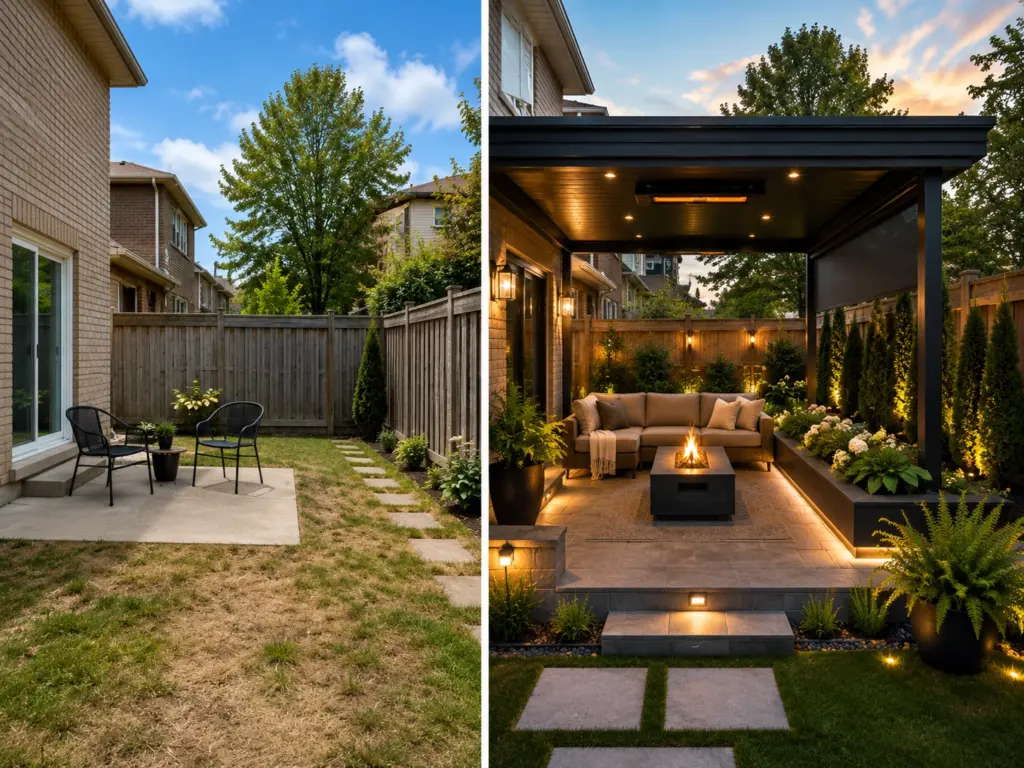
Small Backyard Renovation Ideas With Big Year-Round Payoff

You don’t need a large backyard or a big budget to get genuine year-round use out of your outdoor space. A smaller backyard works in your favour here: fewer decisions, less to maintain, and quicker to pull together.

On top of that, a pergola with a retractable shade sail gives small patios a flexible cover without feeling closed in. Here, composite decking underneath adds a clean, low-maintenance surface that holds up through wet weather. And climbing vines along a garden wall add visual interest without eating into usable space.

With that in mind, an outdoor heater and some well-placed lighting can extend the patio well into cooler evenings. From there, a modest paved area with built-in benches gives the space a defined spot that the whole family naturally gravitates toward.

Small backyard ideas like these deliver consistent year-round living without a full renovation.

Your Backyard Is One Step Away From Year-Round Living

Year-round outdoor living is achievable in almost any backyard with the right combination of cover, warmth, and layout. The ideas in this article are a solid starting point for figuring out what your outdoor space needs. Small changes in the right areas go a long way.

Here’s a quick recap of the features worth prioritising in your plan:

  • A covered patio or sheltered area that handles rain and heat
  • An outdoor fireplace or fire pit for warmth and atmosphere
  • Durable, low-maintenance materials like stone, composite decking, and stainless steel
  • Outdoor lighting that makes the space usable well into the night

At Avalon Acres, we design outdoor living spaces built to handle Brisbane’s climate across every season. From outdoor kitchen builds to full backyard renovations, we’ve helped hundreds of homeowners get year-round use out of their space.
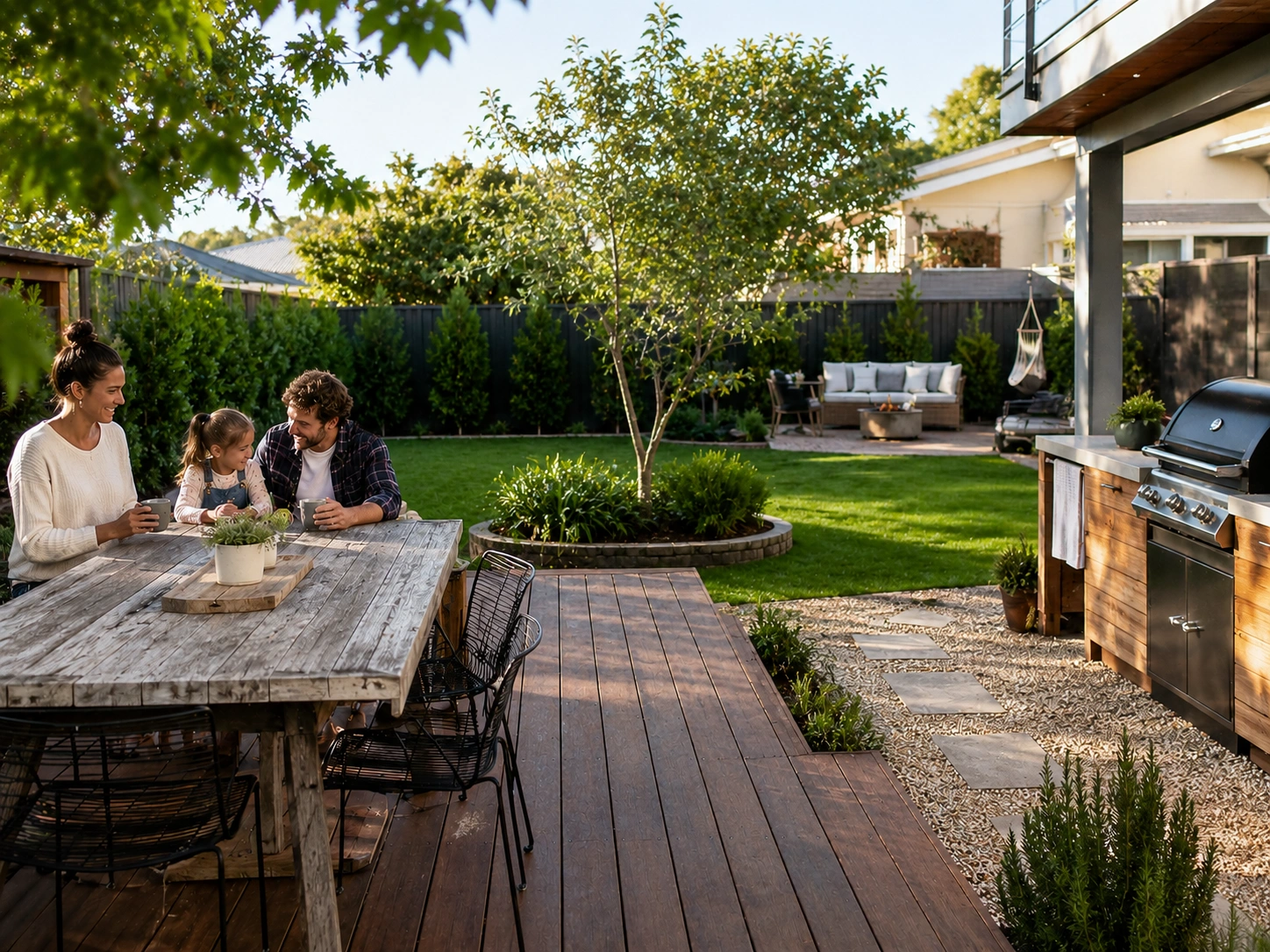
Get in touch with our team today.

post

How to Turn a Basic Backyard Into a Functional Outdoor Living Space

Most backyards start with good intentions. There’s a patch of grass, maybe a tired old deck, and a vague idea that one day it’ll become something worth spending time in. But without a clear plan, that day keeps getting pushed back.

A well-thought-out outdoor living space does more than look good in photos. It gives your home an extra room, one the whole family can use for morning coffees, weekend barbecues, or just winding down after a long day.

The good news is that getting started doesn’t need to be overwhelming. This guide walks you through the backyard design ideas and practical steps to make it happen.

Backyard Design Layout Where Every Good Outdoor Space Starts

A strong backyard design layout starts with zoning. Before you pick furniture or plants, divide the space into clear areas for cooking, dining, and lounging. If you have kids, a play zone too.

Following our proven backyard zoning design guide can help create a more organised and functional outdoor space.

Good flow between those zones influences how the yard feels day to day. If people have to squeeze past the BBQ to reach the seating, the layout is working against you.

It also pays to factor in sun direction, prevailing winds, and any existing structures early in the planning process. These details influence how usable each zone is once the outdoor space is built and used.

Outdoor Living Space Ideas That Work for Any Size Yard

Small Backyards: Zone Smart, Go Vertical

Plenty of great outdoor spaces come from small or awkward yards. A narrow side yard, a sloped block, or an irregularly shaped garden can still accommodate a fully considered outdoor space. With thoughtful planning, even challenging layouts can accommodate comfortable seating, dining areas, storage, and greenery.

Let’s look at how to make the most of compact outdoor areas.

Small Backyards: Zone Smart, Go Vertical

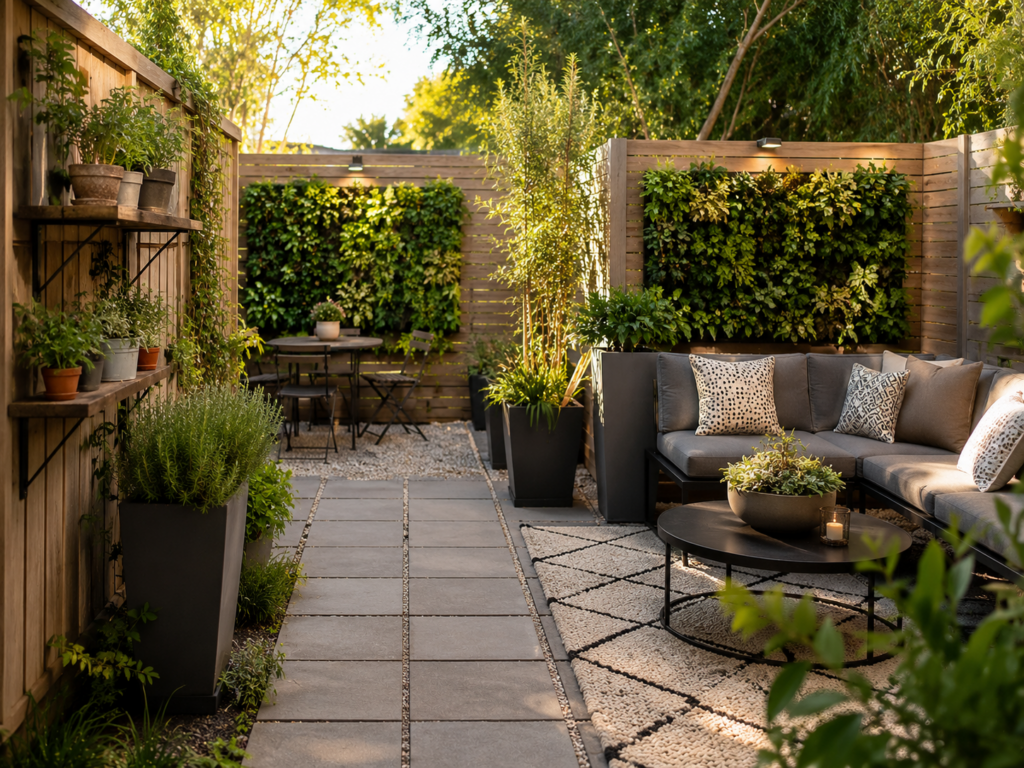
A well-zoned small backyard feels twice the size, without any sacrifice of function to get there. Vertical gardens, wall-mounted shelves, and tall planters are some great design ideas for tight spaces. They draw the eye upward and free up floor area for furniture and movement.

In many cases, zoning with pavers or outdoor rugs defines separate areas within a compact footprint. And for furniture, foldaway or stackable styles keep things flexible depending on how you’re using the space that day. You can also browse to learn more about the benefits of green spaces in your backyard.

Larger Spaces: Let the Layout Lead

A larger backyard gives you room to create separate outdoor “rooms,” each with its own feel and purpose. Distinct zones for dining, lounging, and garden areas give the yard structure without making it seem overdone.

A central pathway or sightline ties those zones together cleanly. For surface materials, mixing timber decking with paving is a popular choice among Australian homeowners and adds visual depth across the landscape.

A successful outdoor living area is measured by how well it supports relaxation, entertaining, and everyday family life. Smart design choices can upgrade any backyard to feel more welcoming and usable.

Shade, Lighting, and Greenery: The Outdoor Design Trio

Without shade and decent lighting, even a well-designed backyard gets abandoned after a few hours. That’s especially true through a Brisbane summer, where an unshaded outdoor space can become unusable by mid-morning. Features such as pergolas, covered patios, and layered outdoor lighting are also among the outdoor upgrades that add value.

Learn three elements that tie a functional outdoor plan together:

  • Shade Options for Your Backyard: Pergolas are a solid, permanent shade solution that also adds to the overall aesthetic of the landscape. For more flexible or budget-friendly setups, umbrellas and shade sails do the job well and suit a range of backyard styles.
  • Lighting That Extends Your Evening: String lights sync better for ambience across dining and lounge zones. Similarly, solar pathway lights keep garden walkways safe after dark, and wall-mounted lanterns add depth to fences and outdoor walls.
  • Greenery and Texture: Layered planting brings the landscape design together. Mixing tall, medium, and low plants adds visual depth and softens hard paving or building edges. Even Potted plants get along on smaller sites where ground planting isn’t an option.

A good balance of all three elements revamps how long you spend outside each day.

Shade, Lighting, and Greenery: The Outdoor Design Trio

Every Outdoor Space Needs a Focal Point

A focal point gives your backyard a reason to draw people in. Without one, even a well-laid-out outdoor space can feel a little flat, like something is missing.

A fire pit is one of the most popular choices among Australian homeowners. It anchors a gathering zone, works year-round, and gives the whole yard a natural place to pull seating around for family nights or entertaining friends.

Water features are another strong option. They add a calming feel to the landscape and suit backyards of most sizes. For something more functional, an outdoor kitchen or BBQ station makes a great visual centrepiece and gives the space a clear purpose of relaxing.

Outdoor Kitchen Planning: What to Consider Before You Build

Good outdoor kitchen planning comes down to three things: the right location, weather-rated materials, and enough prep and storage space to make it usable.

Location should be the first priority, as it influences how conveniently you use the space day to day. Position the kitchen close to your indoor space where possible. It keeps movement between the two areas smooth and cuts down on unnecessary trips during meals.

Material selection is equally important. Benchtops and cabinetry take a beating outdoors, so choose options rated for UV exposure and moisture. They’ll stay looking good for longer and require less maintenance.

Storage also deserves careful consideration. Bench seats with built-in compartments are a popular addition to well-designed outdoor spaces because they reduce clutter without taking up extra room.

Finally, do not overlook the practical details. Proper drainage prevents water from pooling after rain, which is a common issue in Australian backyards. Clear walkways also help keep the space safe and functional, whether you are using it daily or entertaining guests.

A little extra thought during the planning stage can prevent a lot of frustration once the outdoor living space is complete and in regular use.

Outdoor Kitchen Planning: What to Consider Before You Build

Your Backyard Won’t Fix Itself, But We Can Help

A functional outdoor living space doesn’t happen by accident. It takes a bit of inspiration, some honest planning, and the right people to bring the design ideas to life. But once it’s done, it adds genuine value to your home and your day-to-day life.

If you’re ready to spruce up your backyard and aren’t sure where to start, browse through our recent projects for ideas and examples of what’s possible across a range of styles and budgets.

At Avalon Acres, we work with Brisbane homeowners to design and build outdoor spaces that actually get used. Get in touch today, and let’s talk through what your yard could look like.

post

What Actually Adds Value in a Backyard Renovation

Backyard renovations add value when the budget goes toward functional, buyer-friendly upgrades. Most Brisbane homeowners only work that out after inspection day. And the finished result doesn’t hold up at inspection.

A lot of Brisbane homeowners know this feeling well. You put real money into the backyard, it looks great on a Sunday, but when inspection day arrives, buyers walk through unmoved. At the end of the day, buyers don’t see the invoice. They just see the result.

And that’s a hard position to recover from. This article covers which outdoor upgrades improve your home’s value, which ones rarely justify the cost, and how to read the difference before you spend.

Let’s get into it.

Outdoor Upgrades That Add Value Vs. Ones That Don’t

Outdoor upgrade designed around people's daily lives

Honestly, not all outdoor upgrades are equal when it comes to resale. Australian property data shows that outdoor spaces designed around how people live, dine, entertain, and relax consistently outperform purely decorative upgrades at resale.

The breakdown below tells the story.

Worth Doing

Unnecessary

Alfresco area and paving

Tennis court

Garden beds and planting

Water feature

Covered outdoor living spaces

Conversation pits

Outdoor kitchens (built well)

Outdoor art

Pergolas and shade structures

Elaborate lighting rigs

Think of it like buying a treadmill. It feels like a great idea at the time, but most end up as expensive clothes hangers. Backyard features work similarly, and after working across dozens of Brisbane backyards, we’ve found that niche upgrades regularly fall into the same trap.

Outdoor Living Areas: Why Buyers and Valuers Pay Attention

Outdoor living areas directly influence both buyer perception and property valuations. For example, a well-designed alfresco space looks good and adds usable area to the home. This strategy enables buyers and valuers to treat it accordingly.

The following details carry real weight at inspection and valuation.

What Buyers Look for in an Outdoor Living Space

Outdoor living spaces with natural light, shade, and seating read as a direct continuation of the home’s interior. In practice, buyers respond very differently to a functional outdoor space than to an empty yard, especially on inspection day.

For instance, we’ve seen buyers respond well to a covered alfresco area with built-in seating, particularly one designed to hold up through a Brisbane summer. That’s because a covered, functional space tells buyers the outdoor area works for them from day one.

How Valuers Assess Outdoor Areas

As we mentioned earlier, outdoor areas built around a clear purpose, dining or entertaining guests, consistently receive favourable mentions in Brisbane valuation reports. From a valuation standpoint, indoor-outdoor flow goes beyond design preference. A well-connected outdoor area signals a considered layout, and valuers factor that directly into their assessment of the home’s overall liveability.

The truth is, not every upgrade pays for itself, but research into renovation returns shows that functional living space additions come closest every time.

Are Outdoor Kitchens Worth the Investment?

A well designed Outdoor Kitchen to suit the climate

Outdoor kitchens can only add real value to a property when they are built well and designed to suit the climate. And no, a portable BBQ and a fold-out table don’t count. A genuine outdoor kitchen needs the right materials, positioning, and layout to pay off at resale.

These three decisions determine the outcome:

  1. Weather Resistance: Brisbane summers are brutal on outdoor materials. Benchtops and cabinetry take the worst of it, which is why material selection is important. Stainless steel and compressed cement sheeting resist warping and corrosion well in Brisbane’s climate. And pairing them with weather-resistant furniture keeps the whole setup low-maintenance for years.
  2. Layout and Positioning: An outdoor kitchen placed too far from the interior kills the flow of entertaining. So, we recommend positioning it close to the indoor cooking area, with direct sightlines to the outdoor dining space. This arrangement will keep guests comfortable and hosts sane.
  3. Shade and Shelter: Without overhead cover, an outdoor kitchen sits unused for months of the year. In Brisbane’s weather, an overhead cover is not optional. A pergola helps, but insulated panels outperform polycarbonate roofing in Brisbane’s heat, where afternoons regularly push past 30 degrees.

In short, a well-built outdoor kitchen adds to both daily livability and long-term value. However, a poorly planned one rarely recovers its cost.

Landscaping Choices That Pay Off at Resale

Of all the pre-sale upgrades a homeowner can make, good landscaping delivers one of the strongest returns. What’s more, landscaping and gardening efforts sit consistently at the top of high-return improvement lists, and that holds across Brisbane properties.

The flip side is just as important to understand. A neglected garden signals poor upkeep before buyers have even stepped inside, and it colours how they see everything else during the inspection. So when you invest in good landscaping, you improve curb appeal, lift property value, and give buyers confidence that the home has been looked after.

Simply put, less is more when it comes to pre-sale landscaping. A good professional landscaper will always lean toward structure and groundcover over decoration. And more often than not, those choices are what translate into significant value at resale.

Low-Maintenance Design and the Best Plants for Brisbane Backyards

Low maintenance garden beds in the backyard

A low-maintenance backyard is one of the most appealing scenes a property can offer. That’s because Brisbane outdoor spaces need to hold up through intense summers and heavy wet seasons, and buyers know it.

Here is what to focus on.

Plants That Perform Well in Brisbane’s Climate

For Brisbane backyards, the best plants handle heat, humidity, and seasonal storms without much intervention. Native species survive here with minimal attention because local soil and rainfall patterns already suit them.

From there, the plant selection becomes straightforward. Low-maintenance garden beds built around lomandra, callistemon, and grevillea stay presentable year-round with very little work involved (Lomandra and callistemon are good starting points, tough, low-water, and widely available).

Design Choices That Keep Maintenance Low

Paved or gravelled areas are worth considering for one simple reason: they cut down lawn maintenance while adding curb appeal at the same time. Future buyers notice that combination.

Beyond the hard surfaces, a tidy garden with clean edges and consistent groundcover around a simple patio layout is what prospective buyers remember after inspection.

In short, the best backyard for resale is often the one that needs the least looking after. Before you finalise your renovation plan, here is where a lot of budgets go wrong.

Common Mistakes That Hurt Your Landscaping Return on Investment

A handful of backyard features consistently fail to return their cost at resale. The three that Brisbane homeowners encounter most are swimming pools, laser-cut screens, and overspending on personal taste.

Each one tells the same story at resale.

  • Swimming Pools: An inground pool in Brisbane costs tens of thousands to install, with ongoing maintenance adding to that bill every year. That investment rarely comes back at resale. On top of that, pools appeal to a narrow buyer segment, which puts a ceiling on auction competition.
  • Laser-cut Screens: Decorative screens might look sharp on a mood board, but they add no functional value to an outdoor area. Trends in outdoor living move quickly. What looked fresh five years ago already looks dated on many Brisbane properties.
  • Overspending on Personal Taste: Conversation pits, water features, and outdoor art are personal choices that buyers may not share. Most walk through and see a removal cost, not a feature. So every dollar spent on a niche addition could go toward paving or a covered alfresco area instead.

That’s why our experts always say: spend on what a wide range of buyers will value, while your personal choices wait.

Not Every Upgrade Is Worth Your Money

Backyard renovations can add serious value to a property. But plenty of Brisbane homeowners spend big and see little return, simply because the upgrades they chose looked good without appealing to future buyers.

In this article, we covered which outdoor living spaces pay off at resale, which common mistakes hurt your landscaping return on investment, and how low-maintenance design keeps buyers and valuers happy.

The right upgrades are clear. Avalon Acres works with Brisbane homeowners on outdoor renovations that add real, lasting value. Our team will take you through every decision you need to make.

Let’s build something worth every cent.