
Wind sets your outdoor fireplace smoke direction, so a seat that’s perfect at lunch can sit in a grey plume by dusk. Smoke simply rides whatever air crosses your yard.
Many backyard fireplace smoke problems begin at the planning stage, when owners pick a spot for the views alone. At Avalon Acres, we treat wind as part of the layout. Plan the fireplace and seats around your prevailing breeze, and the smoke stays out of your guests’ faces.
This guide covers why wind bends smoke toward seats, four ways to read your yard’s breeze, the build choices that lift smoke up the flue, and where to put chairs. Read it before the first slab goes in.
Why Does Wind Direction Push Outdoor Fireplace Smoke Toward Your Seats?
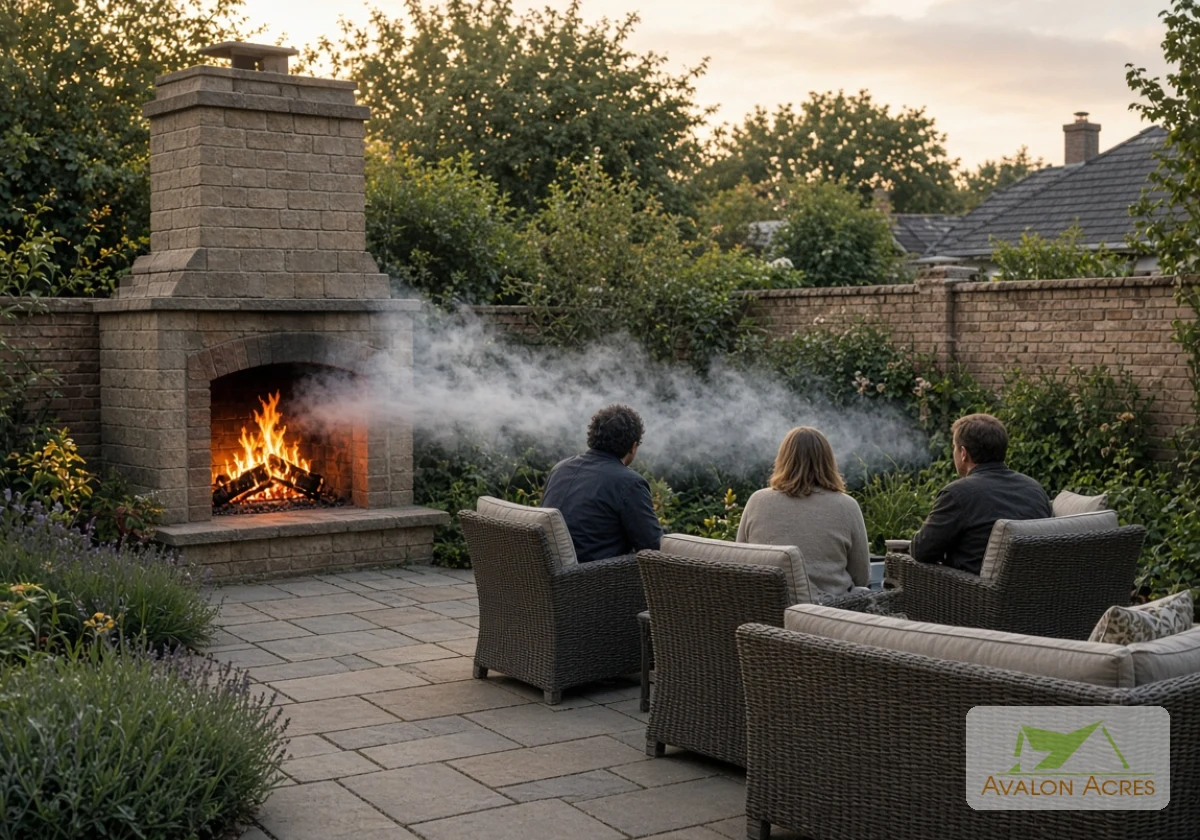
Wind can push smoke towards your seating area by bending the rising plume sideways. An outdoor fireplace relies on a natural draft, which allows hot air to rise through the chimney while drawing fresh air into the firebox. When wind disrupts this upward flow, smoke can spill out or travel sideways instead of clearing above the chimney.
Even a light crosswind can change where the smoke goes. It may push the plume down to head height and carry it across the patio. As a result, people sitting downwind of the fire are more likely to get smoke in their faces, while those sitting upwind stay relatively clear.
Nearby walls and buildings can make this problem worse by changing the direction of the wind. When air hits a solid wall, it flows over the top and creates a low-pressure area on the sheltered side. This can pull smoke back towards the fireplace or trap it close to the ground, leaving parts of the patio smoky (the classic “smoky corner” every backyard host knows too well).
The smoke may also linger longer as the evening gets cooler. Falling temperatures can reduce the upward movement of smoke, which allows it to spread in a low layer across the seating area. If you’ve had to move your chair several times to avoid smoke, changing wind and temperature conditions may be responsible.
Reading Your Backyard’s Prevailing Breeze Before the First Paver Goes Down
Your yard has a dominant breeze, and it usually blows from the same quarter at the same time of day. Use the four checks below to see where the air comes from and how it moves once it reaches your yard.
1. Check the Bureau of Meteorology Wind Rose for Your Suburb
Begin with the Bureau of Meteorology’s climate statistics for your nearest weather station. As the NSW Government guidance on wind roses puts it, “Wind roses show the frequency of occurrence of wind speed and direction.”
Each weather station has separate wind roses for 9 am and 3 pm. Since you’ll most likely use your outdoor fireplace in the afternoon or evening, the 3 pm chart will give you a more useful starting point for checking the usual wind direction.
On the 3 pm chart, look for the longest spoke, which shows the direction the wind most often comes from. Use this information when positioning your fireplace, with its back facing the prevailing wind. This helps direct smoke away from your seating area rather than towards it.
2. Run a Ribbon Test at the Hour You Plan to Sit Outside
Weather station charts give you a general idea of wind direction, but fences and nearby buildings can change how air moves through your yard. Testing the spot where you plan to install the fireplace will give you a better idea of the local conditions. Tie a light ribbon to a stake where the fireplace will stand to see which way the wind blows.
Then check the ribbon around the time you’d normally light a fire, ideally over five or six evenings. Each time, note which direction it points or take a quick photo with your phone. Repeating the test helps you see if the wind follows a regular pattern or changes throughout the week.
After several evenings, look for the direction that appears most often. This pattern can help you position your fireplace and seating so smoke is less likely to blow towards people. You may still need to move the chairs when the wind changes, but the usual layout will work with the most common conditions.
3. Map the Walls, Fences and Trees That Bend the Breeze
Fences, trees and nearby buildings can change how wind moves through your yard. For example, a two-storey house, tall paling fence or row of lilly pilly trees can block the breeze and create swirling air behind it. These sheltered areas slow the wind, allowing smoke to collect near the ground instead of drifting away.
You can identify these areas by sketching your yard and marking every solid barrier taller than head height. Pay particular attention to the space behind each one, as smoke is more likely to linger where the wind slows down.
Once you’ve marked these spots, use your sketch to choose a suitable fireplace location. Keep it away from sheltered areas and leave plenty of open space downwind. This gives the breeze room to carry smoke away from your seating area.
4. Note How Summer Sea Breezes and Winter Westerlies Differ
Wind direction can change with the seasons, especially in coastal areas. Summer afternoons often bring breezes from the sea, while winter winds may come from the west or south-west. These seasonal changes can affect where smoke travels around your yard.
Melbourne is one example, where a cool change can quickly shift the wind to the south-west. Since you’ll probably use your outdoor fireplace more often during the cooler months, give the winter wind pattern more attention when planning its position.
Plan your fireplace and seating around the usual winter conditions first. Then check that the layout still works when summer breezes come in on warmer evenings.
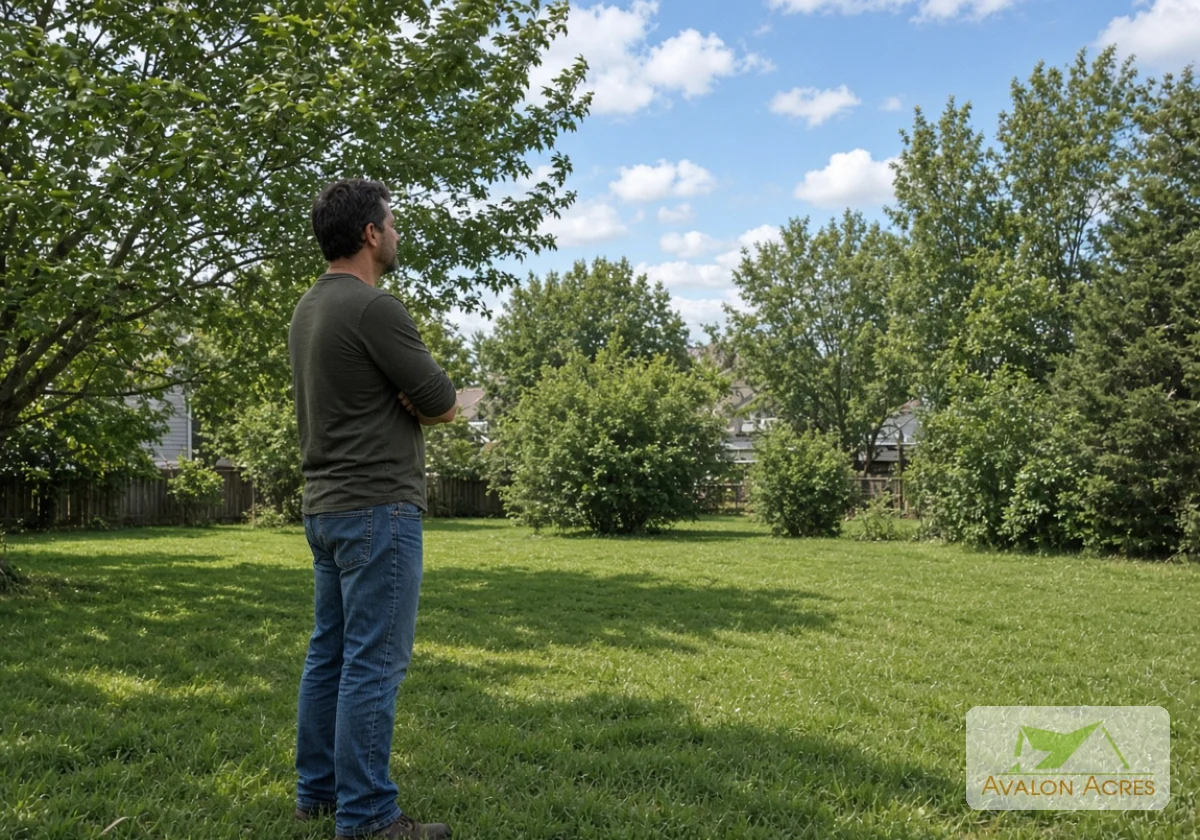
Fireplace Design Choices That Send Smoke Up the Chimney Instead of Across the Patio
Once you know the breeze, the build itself decides how well the fire draws. A strong draft lifts smoke high enough that a crosswind carries it over guests rather than through them.
Smoky outdoor fireplaces often trace back to two parts of outdoor fireplace design and installation: chimney height and firebox shape. Any chimney that sits too low stays inside the turbulent air rolling off nearby rooflines and walls, so the draft never reaches clean, steady air.
Fuel plays its part as well. EPA Victoria’s wood-burning advice warns against a smouldering fire, saying “it’s inefficient, generates more smoke and creates a fire hazard.” Choosing the right wood helps most here, because dry, seasoned hardwood burns hot and cuts the smoke at its source.
Check these points with your builder before anyone lays a brick:
- Chimney Height: Keep the chimney above nearby roof ridges and walls to help smoke clear the roofline. A higher outlet also reduces the chance of smoke getting caught in swirling air.
- Back Wall: Position the solid back wall towards the prevailing wind. This creates a barrier between strong gusts and the firebox.
- Firebox Shape: Choose a deep firebox with a narrow throat to support a strong upward draft. Smoke should then travel up the chimney rather than spill into the yard.
- Chimney Cap: Wind can blow straight down an exposed flue, forcing smoke back out of the fireplace. A suitable cap helps prevent this from happening during gusty conditions.
- Fuel Choice: Seasoned hardwood burns with less smoke than wet or unseasoned wood. If you need to avoid smoke, natural gas and electric fireplaces offer alternatives.
Review these details before the builder starts work, as some changes are harder to make later. For instance, a short chimney may require major rebuilding, while the cap and fuel choice are easier to change after installation.
Outdoor Seating Smoke Control: Where to Put Chairs So Guests Stay Clear of the Plume
Good seating follows the same breeze map you drew earlier. Chairs belong on the upwind side and the flanks, where smoke drifts away from faces. Each seat position performs differently in a typical breeze, as the table shows.
| Seat position | What the smoke does | What to do |
|---|---|---|
| Upwind of the fire | Drifts away from guests | Put your main lounge or dining setting here |
| Side-on to the breeze | Passes in front of the seat | Set chairs back from the firebox and angle them in |
| Downwind of the fire | Blows straight into faces | Keep this side for paths or planting |
| Under a pergola | Collects under the roof | Leave open sides so the smoke can escape |
The side-on row is the most important for small yards, since that’s usually where extra guests end up in a tight outdoor space. Movable patio furniture gives you room to adjust on the odd night the wind swings, while fixed benches belong only on the upwind side. A fire pit follows the same rules, and with no chimney to lift the smoke, seat placement does all the work.
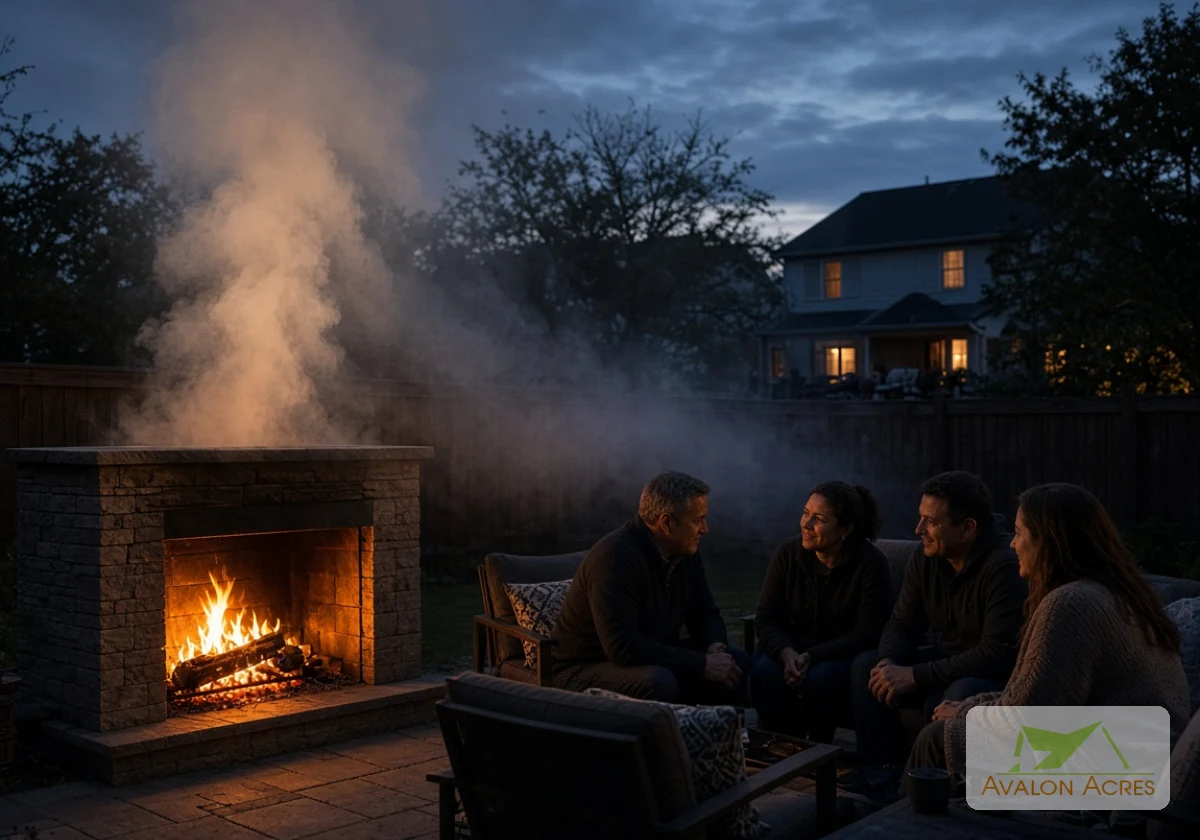
Plan for the Breeze Before You Light the First Fire
Smoke goes where the wind sends it, so the breeze has to shape both the fireplace and the seats. Get that order right, and your guests stay warm without stinging eyes or smoky jumpers.
Pull up your suburb’s wind rose and run a ribbon test this week. After that, sketch your yard’s barriers before you choose a single paver, because each one decides where the smoke will settle.
Ready to plan an outdoor fireplace that works with your breeze? Talk to the Avalon Acres team for layout advice that keeps smoke clear of your seating.